


News
2026.10.22
[Event Report] Hoover–IHJ Strategic Dialogue — New Ways of War and the Frontier of Geoeconomics
On 16 September 2026, the International House of Japan (IHJ) hosted the Hoover–IHJ Strategic Dialogue, co-organized with the Hoover Institution at Stanford University. The Institute of Geoeconomics (IOG) and the Research Institute for Advanced Innovation and GeoStrategy (RAIS), both part of the International House of Japan, also took part in planning and running the program. A delegation of fourteen joined from Hoover. The public sessions drew an audience of around eighty, with twenty media organizations in attendance, eight of them from overseas.
How war is fought is changing, and economic interdependence has become an instrument of coercion as well as a source of prosperity. Against that background, the sessions examined from two directions what strategy Japan, the United States and their partners should build across security, economics and technology.
Session 1 — New Ways of War and Defense
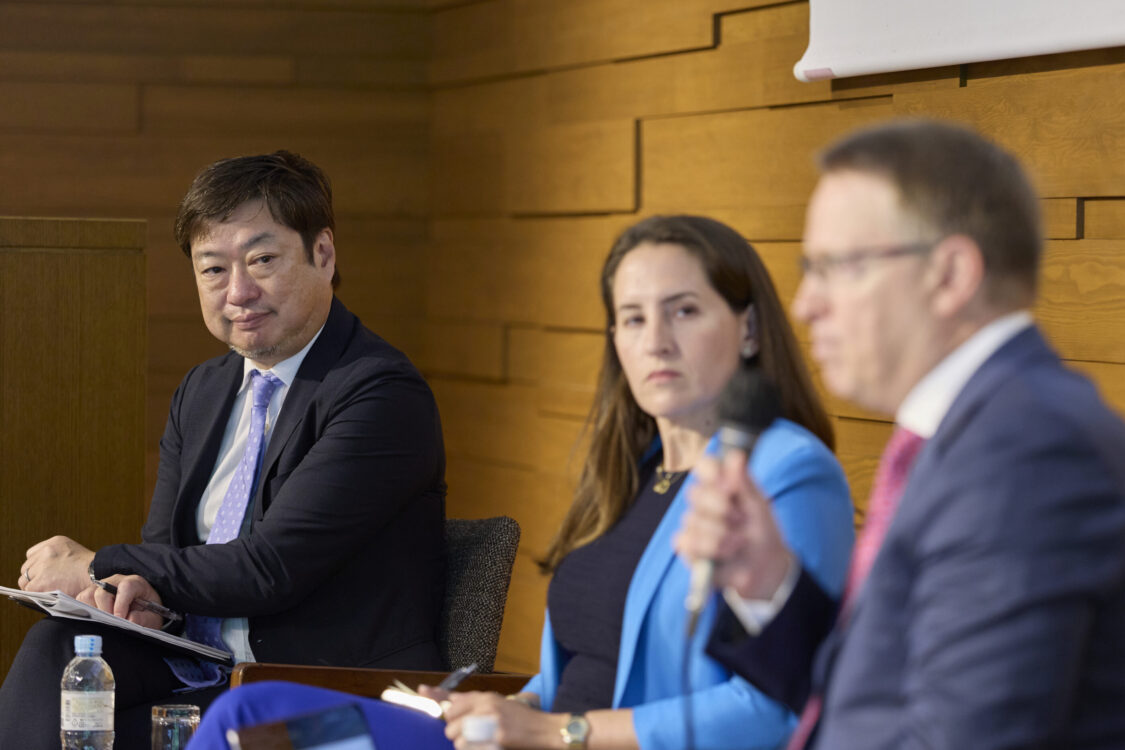
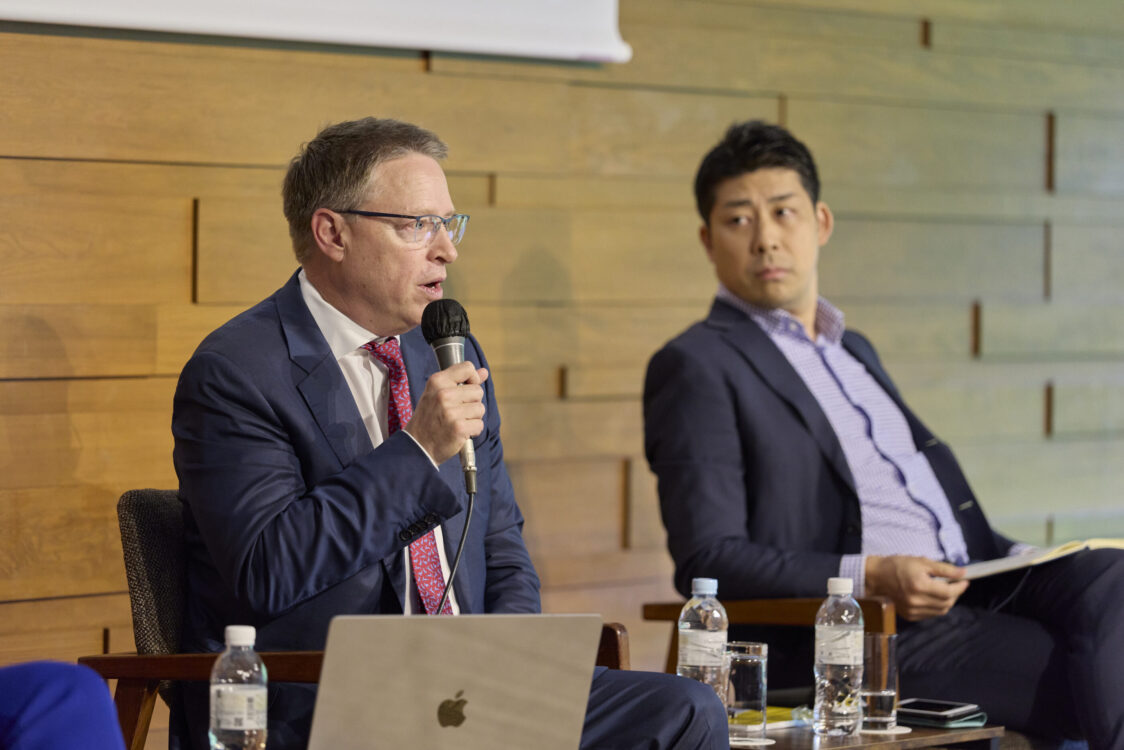
Speakers were Matt Pottinger, Distinguished Visiting Fellow at the Hoover Institution and former US Deputy National Security Advisor; Oriana Skylar Mastro, Center Fellow and Director of the Indo-Pacific Policy Lab at the Freeman Spogli Institute, Stanford University; and Hirohito Ogi, Senior Research Fellow at the Institute of Geoeconomics. Ken Jimbo, Executive Director of the International House of Japan, Co-Director of RAIS and Professor at Keio University, moderated.
The session examined, from both Japanese and American perspectives, how changes in the global security environment are reshaping national defense policy. The limitations of air power alone in achieving victory, the importance of cheap weapons and unmanned systems, and the centrality of resolve were considered against the experience of the United States, China and Japan, and the discussion extended to the first island chain and the role of Taiwan.
Session 2 — The New Geoeconomics
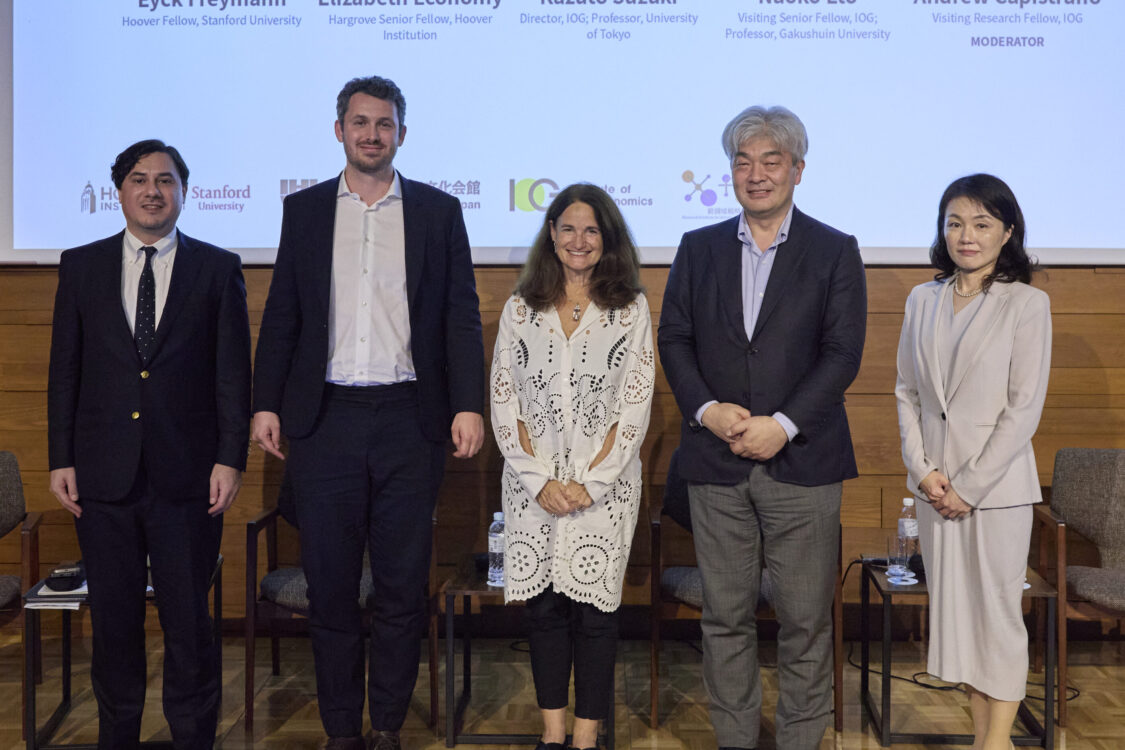
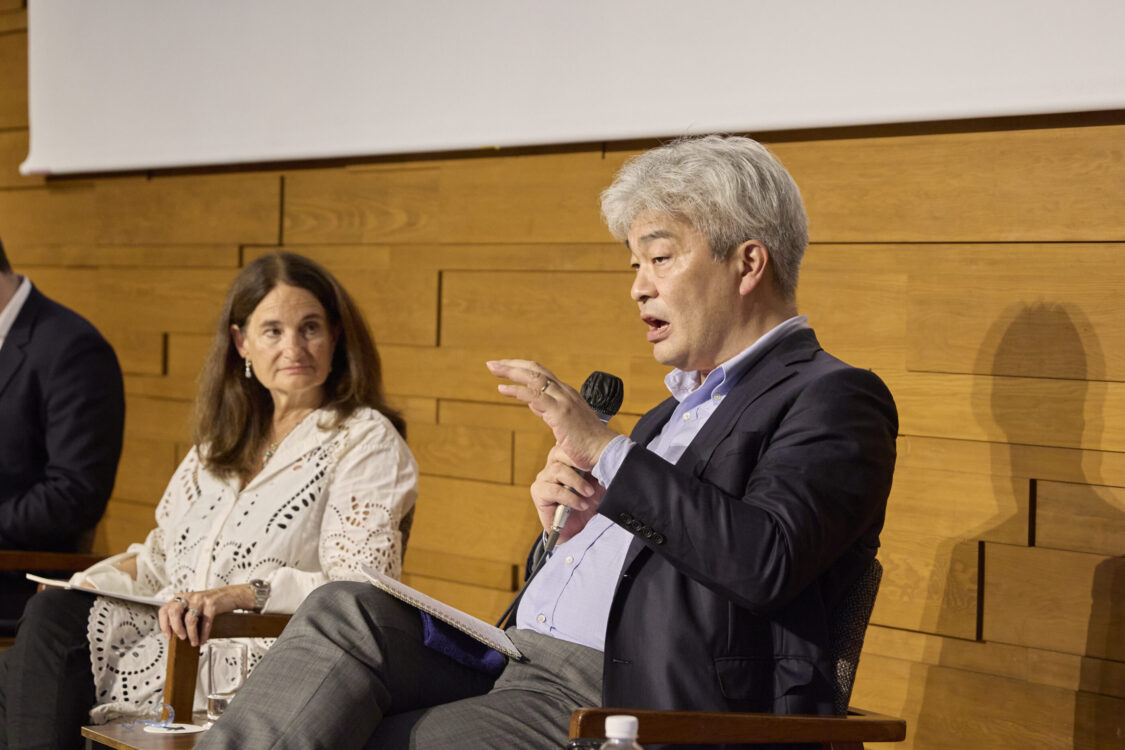
Speakers were Elizabeth Economy, Hargrove Senior Fellow at the Hoover Institution and former Senior Advisor for China at the US Department of Commerce; Eyck Freymann, Hoover Fellow at Stanford University and Director of the Allied Coordination Working Group; Kazuto Suzuki, Director of the Institute of Geoeconomics and Professor at the Graduate School of Public Policy, University of Tokyo; and Naoko Eto, Visiting Senior Fellow at the Institute of Geoeconomics and Professor in the Department of Political Science at Gakushuin University. Andrew Capistrano, Visiting Research Fellow at the Institute of Geoeconomics, moderated.
Taking as its subject what comes after de-risking and export controls, the session moved the discussion from defensive supply-chain resilience toward the construction of strategic advantage. The instruments of Chinese economic statecraft — inducements and coercion, internationalization of the currency, the spread of Chinese products such as AI and electric vehicles, and the creation of a separate economic sphere — were set out, and the discussion widened to how Japan might mobilize its resources, European preparedness, and current assessments of the Belt and Road Initiative.
Welcoming the delegation from the Hoover Institution gave us a valuable opportunity to exchange views candidly on challenges spanning both the security and economic spheres. The International House of Japan will continue to provide a setting for conversations of this kind.
 LINEで送る
- Archives
-
- 2026.10
- 2026.09
- 2026.08
- 2026.07
- 2026.06
- 2026.05
- 2026.04
- 2026.03
- 2026.02
- 2026.01
- 2025.12
- 2025.11
- 2025.10
- 2025.09
- 2025.08
- 2025.05
- 2025.04
- 2025.03
- 2025.01
- 2024.11
- 2024.10
- 2024.08
- 2024.07
- 2024.06
- 2024.03
- 2023.11
- 2023.10
- 2023.09
- 2023.08
- 2023.07
- 2023.06
- 2023.05
- 2023.03
- 2023.02
- 2023.01
- 2022.12
- 2022.11
- 2022.10
- 2022.08
- 2022.07
- 2022.05
- 2022.04
- 2022.02
- 2018.09
- 2015.10
- 2013.11
- 2013.09