






News
Japan-India Distinguished Visitors Program 2026 featuring Kazuyo SEJIMA
Under the Japan-India Distinguished Visitors Program, I-House will be supporting visits of distinguished Japanese intellectuals to India in developing truly bidirectional exchange. Until now, the program has invited fellows only from India to Japan; henceforth, Japanese experts will also be sent to India.
I-House is honored to have Kazuyo Sejima, one of Japan’s most influential architects today, serve as the first Japanese fellow to visit India under this initiative.
Architecture is one field where Japan has a strong global presence. Japanese architects are well positioned to contribute to stronger ties with India and to offer innovative solutions to shared worldwide challenges, such as disaster management, sustainability, and environmental resilience.
*This Program is in collaboration with Shahani Associates.


写真をクリックで拡大写真がみれます。
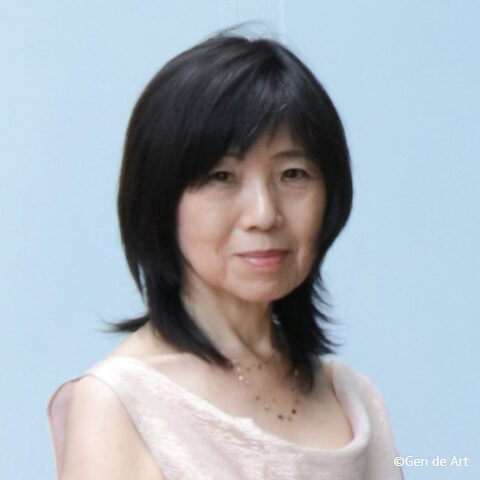
Kazuyo SEJIMA (Architect, Founder of SANAA)
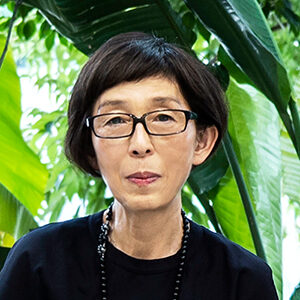
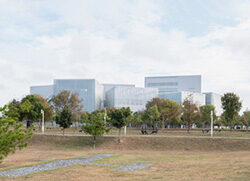
Born in Ibaraki Japan, Kazuyo Sejima graduated from the Japan Women’s University in 1981. In 1987 she opened her own studio in Tokyo and then in 1995, together with Ryue Nishizawa, she founded SANAA. Her own works include House in Plum Grove, Inujima Art House project, and Japan Women’s University Mejiro Campus. SANAA’s main works include the 21st Century Museum of Contemporary Art in Kanazawa, the Rolex Learning Center, Louvre-Lens, Grace Farms, Bocconi University New Urban Campus, La Samaritaine, Art Gallery of New South Wales – Naala Badu Building, Kagawa Prefectural Arena, and Taichung Green Museumbrary. In 2010 Kazuyo Sejima was appointed director of the 12th International Architecture Exhibition of Venice Biennale. Her honors include the Japan Architecture Award, Venice Biennale Golden Lion Award, Rolf Schock Prize in Category of Visual Arts, Pritzker Architecture Prize, Officier de l’Ordre des Arts et des Letters, Prix de l’Équerre d’Argent, the Medal with Purple Ribbon, Thomas Jefferson Medal in Architecture, Praemium Imperiale, Royal Gold Medal, and has chosen for the Person of Cultural Merits. She is currently a professor at the Polytechnic University of Milan, a visiting professor at Japan Women’s University and Osaka University of Arts, an Emeritus Professor at Yokohama National University, and Director of Tokyo Metropolitan Teien Art Museum.
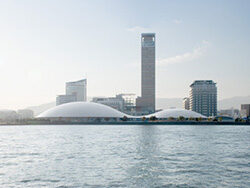
写真をクリックで拡大写真がみれます。
Sejima will deliver lectures in New Delhi and Ahmedabad. Details are as follows:
Lecture Overview
About 40 years ago, Kazuyo Sejima began exploring how architecture might create a more seamless relationship between interior and exterior space. Her central question was: What kind of architecture can truly connect people with their surrounding environment? Over the decades, she has come to believe that achieving this connection enables us—those living in the present—to shape new landscapes while honoring the ones that already exist.
Lecture 1:“Architecture & the Environment”
| Speaker: | Kazuyo SEJIMA (Architect, Founder of SANAA) |
|---|---|
| Moderator: | KT Ravindran(Architect; Former Head of Urban Design at the School of Planning and Architecture) |
| Date: | Tuesday, March 17, 2026, 6:00-7:30 pm |
| Venue: | India International Centre |
| Co-organized by: | International House of Japan, Shahani Associates, and India International Centre |
| Admission: | Free *No reservation required. |
KT Ravindran (Architect; Former Head of Urban Design at the School of Planning and Architecture)
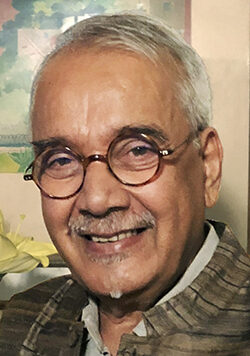
Taught Urban Design for three decades in SPA Delhi, was the Head of Department for 21 years and was Dean and acting Director. He is an Urban Designer currently practicing from Delhi. He has been an active Member of INTACH from its inception, he is Former Convener of the Delhi Chapter of INTACH and has been a Member of the Governing Council of INTACH for two terms. He pioneered the Kerala State Design Policy and is at present Member of the Kerala State Urban Policy Commission. He is Member of the High Level Advisory Board of Konkan Coastal Project. He is Trustee for The Madhavan Nayar Foundation, Kochi. He is Chairman of the Governing Committee for Goa College of Architecture. He has been Member of Academic Boards of multiple Universities in India and was Jury Member in many large competitions across India and abroad. He delivers public lectures in various fora on urbanization. He has contributed to multiple international and Indian journals on the topics of Heritage and Urbanisation. He was Member of the Advisory Board for the United Nations Capital Master Plan, New York. He was Dean and Senior Academic Advisor, RICS School of Built Environment, former Chairman of Delhi Urban Art Commission and was the Founding President of the Institute of Urban Designers India.The Indian Institute of Architects awarded him with the Gold Medal for Education in 2022.
Lecture 2 :“Architecture & the Environment”
| Speaker: | Kazuyo SEJIMA (Architect, Founder of SANAA) |
|---|---|
| Date: | Wednesday, March 18, 2026, 6:00-8:00 pm |
| Venue: | CEPT University |
| Co-organized by: | International House of Japan, Shahani Associates, and CEPT University |
| Admission: | Free *No reservation required. |
Special Session:“The Modernization of Craft and Textiles in Japan”
We will also organize a special session by Yuko Hasegawa—one of Japan’s leading art curators and currently director of the Arts and Design Programs at I-House—in cooperation with the Japan Foundation, New Delhi, as outlined below.
| Speaker: | Yuko Hasegawa (Director of the Arts and Design Programs at I-House; Professor Emeritus, Kyoto University) |
|---|---|
| Date: | Evening of March 16 (time TBA) |
| Venue: | NIV Art Center, New Delhi |
| Co-organized by: | International House of Japan, Shahani Associates, Japan Foundation-New Delhi, and NIV Art Center |
Japan-India Distinguished Visitors Program
Commemorating the 60th anniversary of Japan-India diplomatic relations in 2012, the Japan-India Distinguished Visitors Program was launched with the hope to strengthen the relationship between the people of both countries. The program invites eminent Indian public figures from various fields who are proposing new values or innovative ideas to change the status quo of society. During their stay for a week, the fellows engage in one public lecture, as well as dialogue and discussions with the counterparts and leaders who are tackling similar issues in Japan in their area of expertise.
写真をクリックで拡大写真がみれます。
 LINEで送る