






Experts
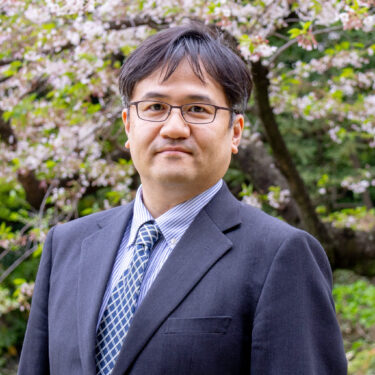
Teppei Tsujita
Senior Research Fellow (Adjunct), Research Institute for Advanced Innovation and GeoStrategy (RAIS)
Profile
Since April 2015, Dr. Teppei Tsujita has been with the National Defense Academy of Japan, where he is currently an Associate Professor. His research expertise is in robotics, and he has been engaged in the research and development of robotic systems operating in real-world environments, including humanoid robots, surgical simulators, and unmanned aerial and ground vehicles (UAVs/UGVs). In particular, his research focuses on system integration, encompassing robotic sensing and motion control, mechanical design, system implementation, and experiments with physical robotic systems.
In recent years, his research has focused on representing the rules and principles of international humanitarian law (IHL) as computational models that can be processed by autonomous systems and applying them to actual robotic systems. Rather than limiting legal and ethical discussions to an abstract level, he quantitatively examines the relationship between IHL requirements and real-world technological capabilities using actual sensors, perception algorithms, control systems, and robots. He further formulates such legal requirements as mathematical models and algorithms, implements them himself, and evaluates their behavior and limitations through simulations and experiments with physical robotic systems. Through this work, he aims to clarify, from an engineering perspective, how IHL requirements can be incorporated into the design and decision-making of autonomous systems under the uncertainties inherent in real-world sensors and AI.
He is also engaged in creating opportunities for experts from different disciplines to discuss issues concerning robotics and armed conflict. In 2024, he established the Technical Section on Security Robotics within the Robotics and Mechatronics Division of the Japan Society of Mechanical Engineers (JSME). The Technical Section currently brings together researchers in international law, social sciences, and engineering, as well as representatives from industry, humanitarian organizations, and science fiction writers, forming an interdisciplinary research community. Its discussions address the relationship between IHL and emerging technologies, including lethal autonomous weapon systems (LAWS), as well as possible approaches to the regulation of future technologies—issues that the Japanese engineering community has historically tended to avoid engaging with.
Prior to joining the National Defense Academy of Japan, he received his Ph.D. in Engineering from Tohoku University and was an Assistant Professor at the Institute of Fluid Science and the Graduate School of Engineering at Tohoku University. He also conducted research as a Visiting Faculty member at the Robotics Institute of Carnegie Mellon University in the United States as a fellow of the Japan Society for the Promotion of Science (JSPS) Overseas Research Fellowships program. Since 2026, he has also served as a Science and Technology Fellow at the Acquisition, Technology & Logistics Agency (ATLA) of Japan.
Concurrent Position
Associate Professor, Department of Mechanical Engineering, School of Systems Engineering, National Defense Academy of Japan
Expertise
Security Robotics / Robotics / System Integration / International Humanitarian Law