






News
2026.02.12
【Event Report】Sedona Forum Tokyo – The U.S.–Japan Alliance: Advancing Freedom, Innovation, and Security in Asia and the World
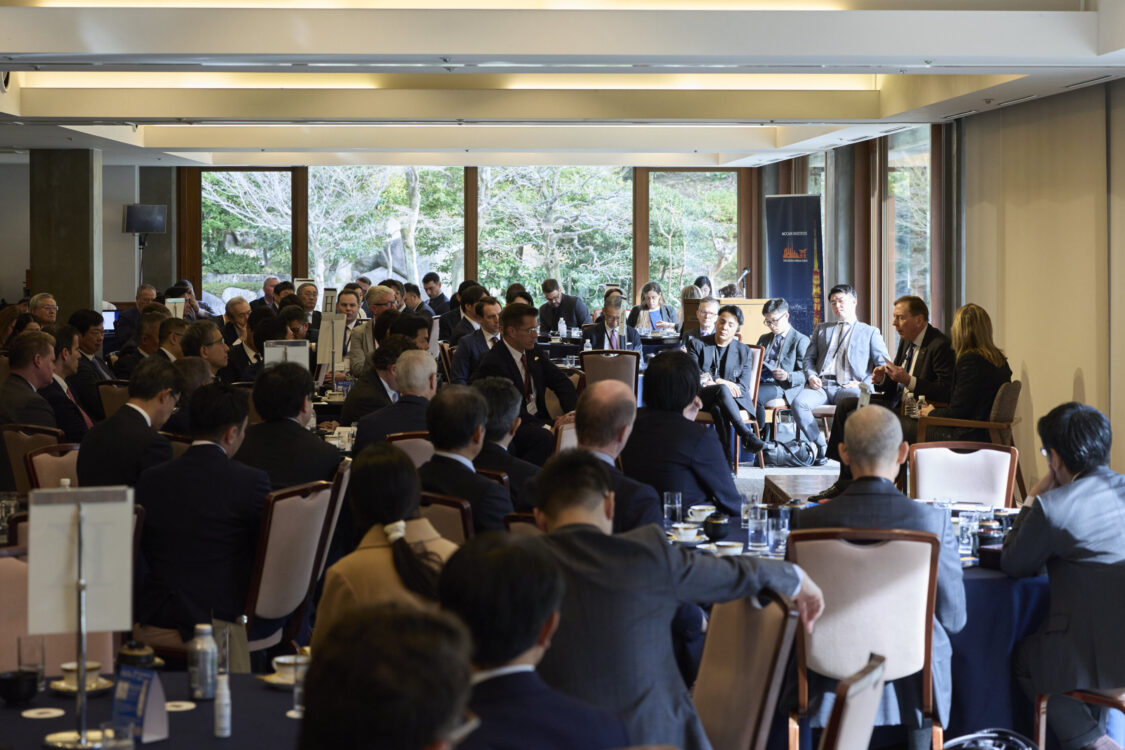
On January 15, 2026, the Sedona Forum Tokyo was convened at the International House of Japan (IHJ), marking the first international edition of the McCain Institute’s flagship annual conference, the Sedona Forum. Co-hosted by the McCain Institute at Arizona State University and the International House of Japan, the forum brought together more than 120
leaders and experts from Japan, the United States, and across the Asia-Pacific region.
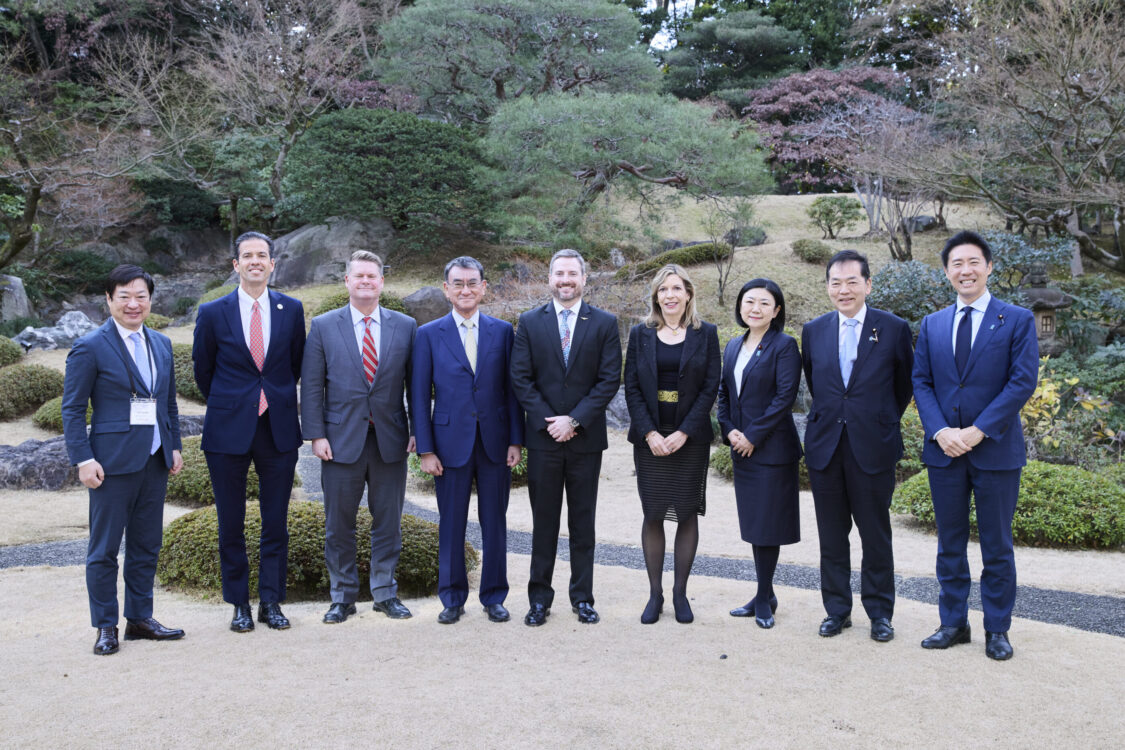
Amid intensifying geopolitical competition, growing Indo-Pacific uncertainty, and increasingly complex shared U.S.–Japan challenges, the Forum provided a timely platform for dialogue by convening U.S., Japanese, and international lawmakers and senior public and business figures. Discussions covered global and regional security, AI-related issues including energy and raw materials—the Taiwan Strait, sports and culture in diplomacy, and developments in global and Japanese finance. IHJ was honored to host this inaugural gathering and to contribute to candid, forward-looking exchanges on diplomacy, technological and energy resilience, and the evolving international order.
Opening Remarks
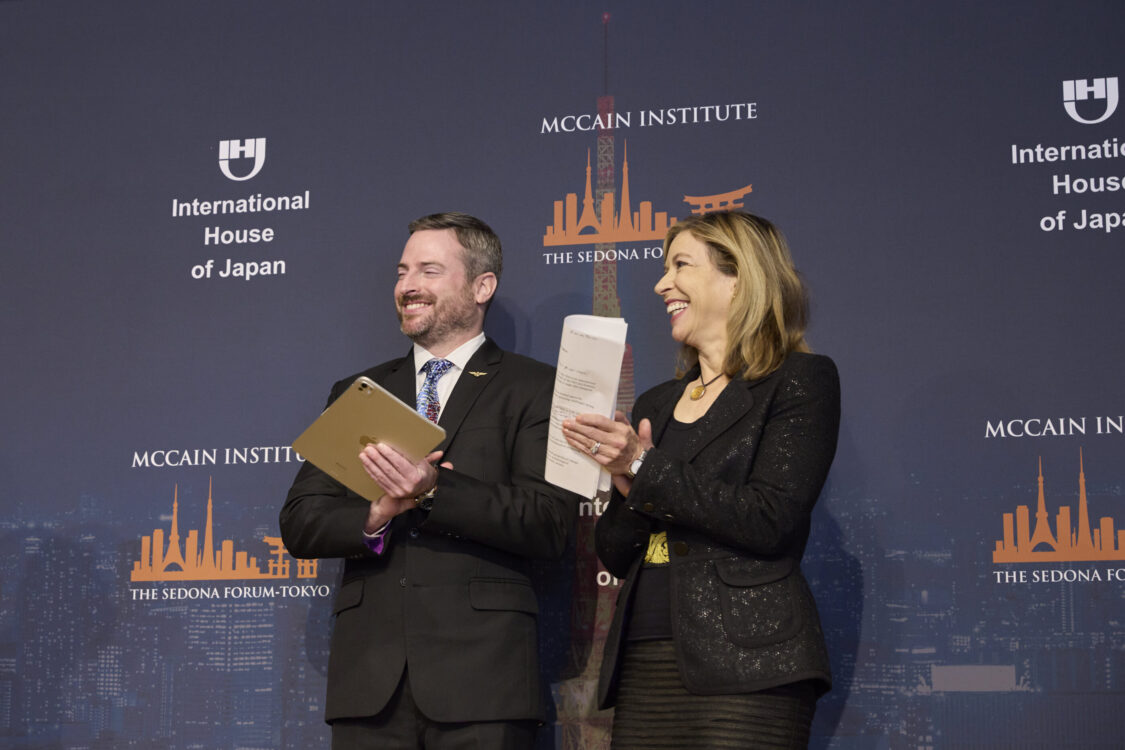
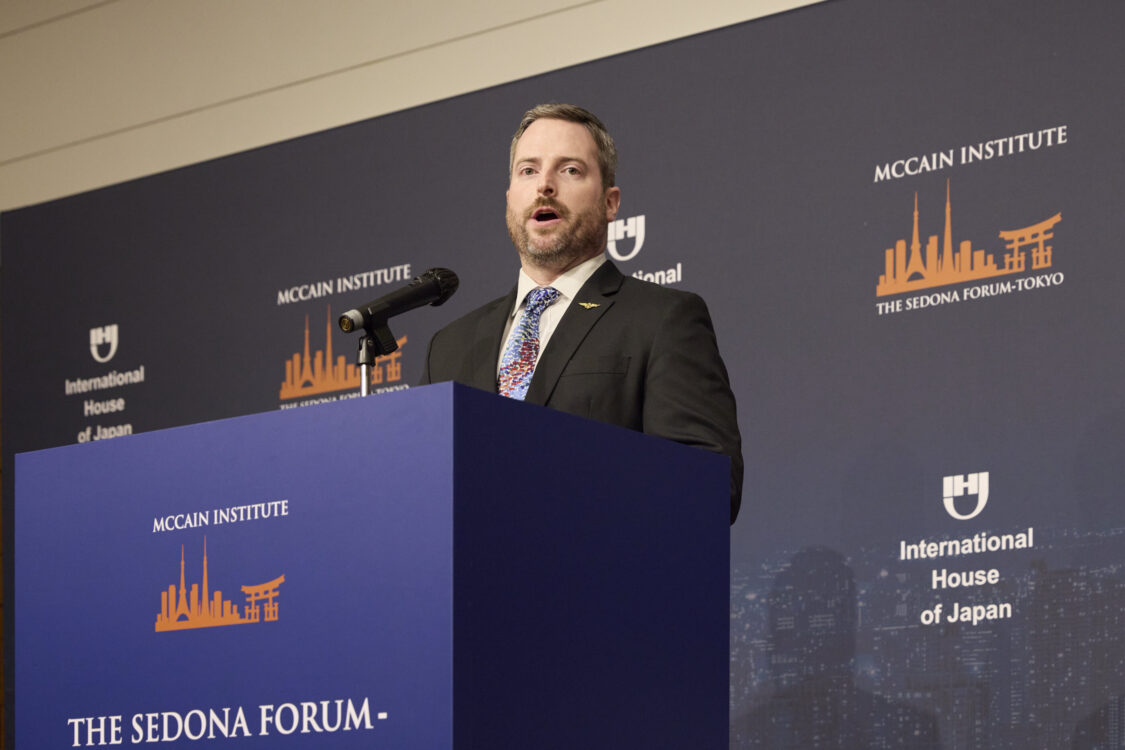
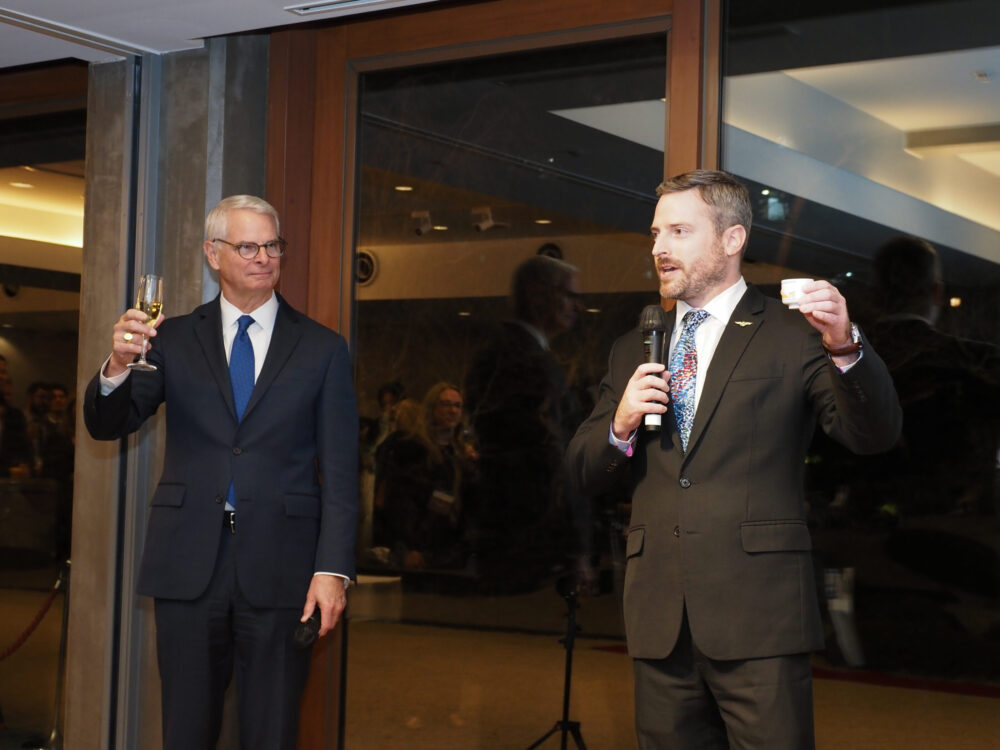
The forum opened with remarks from Jack McCain, Founder and CEO of McCain Advisory KK and Board Member of the McCain Institute, who expressed appreciation to the International House of Japan for hosting the first international expansion of the Sedona Forum. He emphasized the value of bringing the Sedona Forum’s tradition of frank and bipartisan dialogue to Tokyo at a critical moment for the Indo-Pacific.
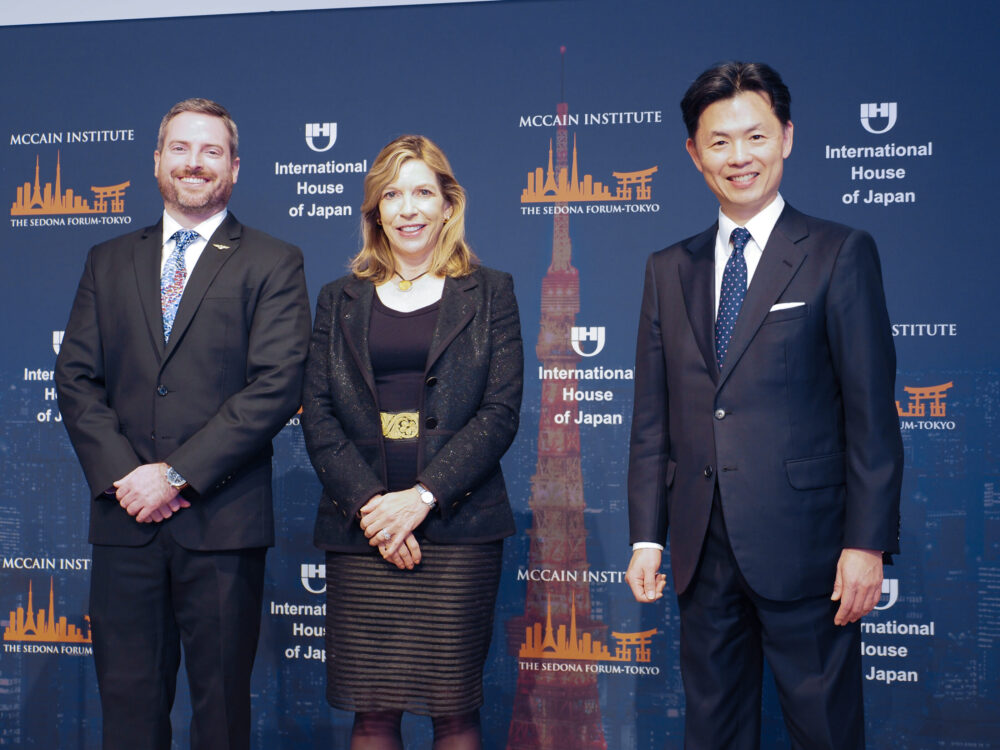
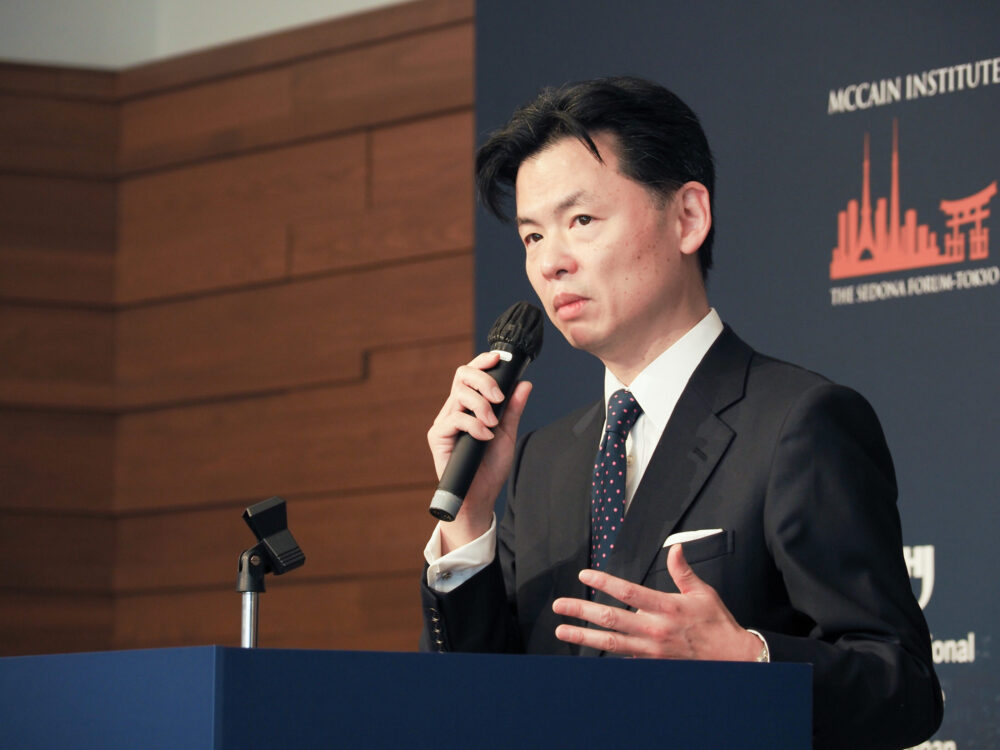
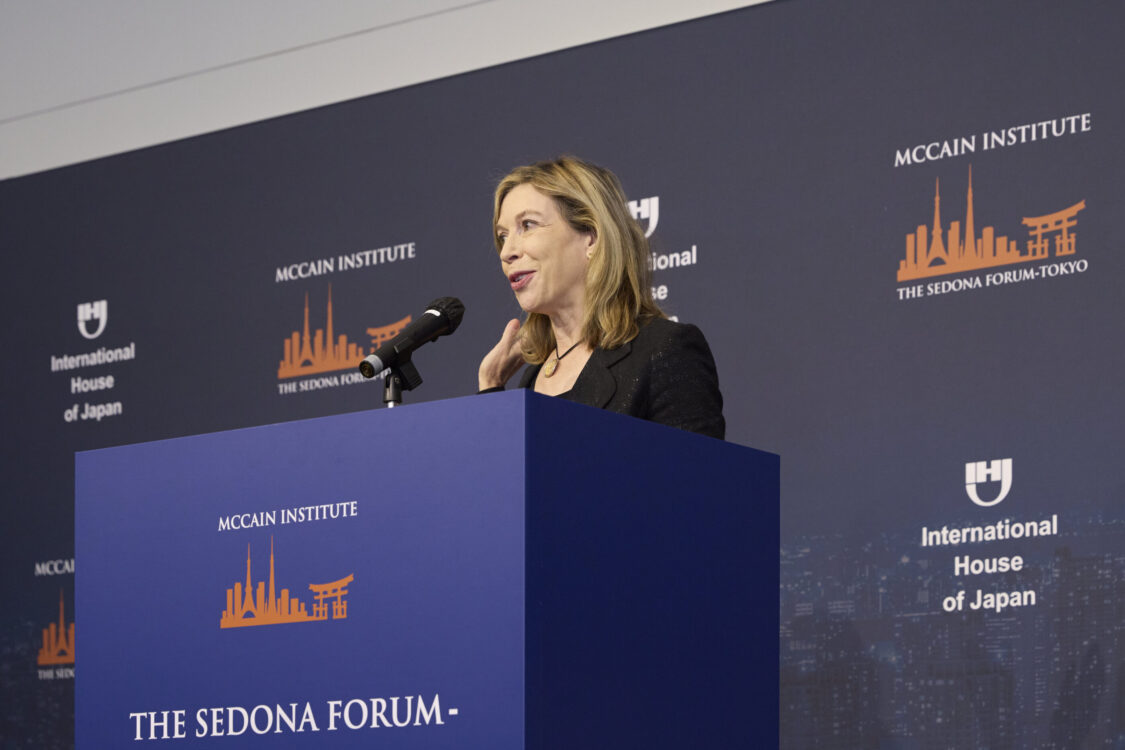
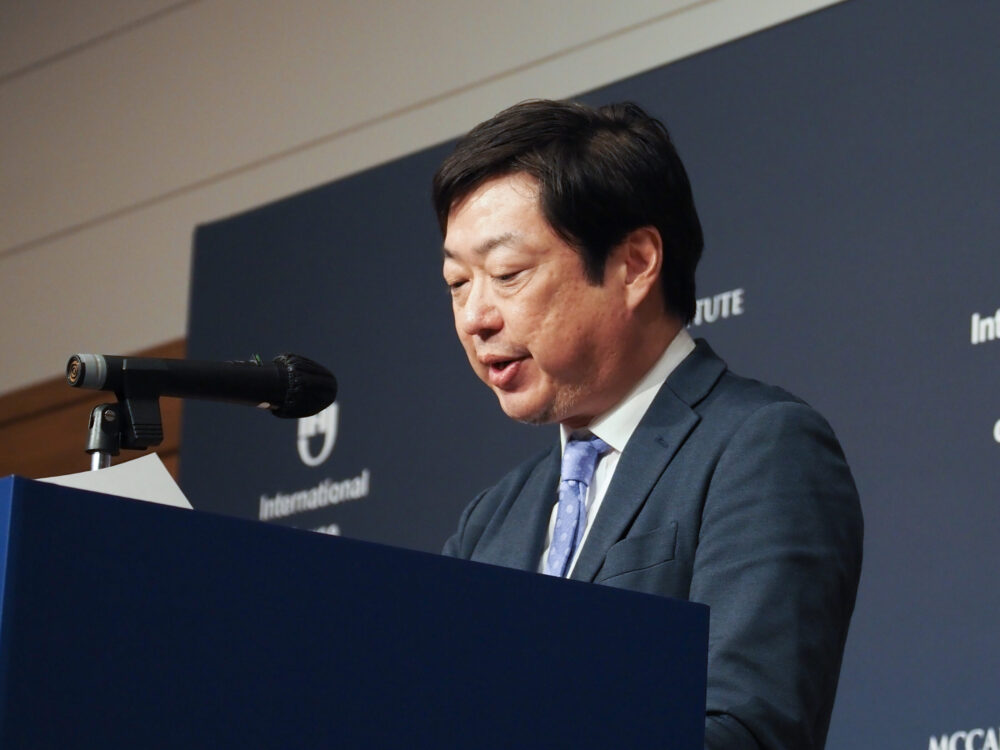
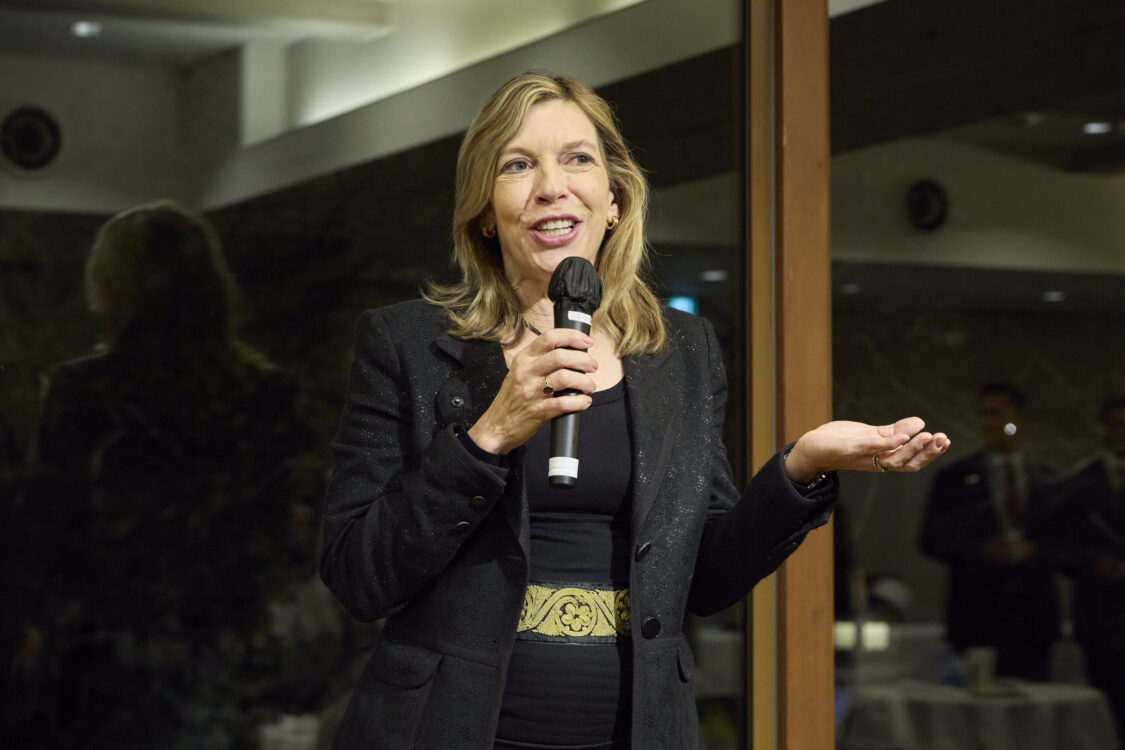
Following introductory remarks from Jack McCain, Founder and CEO of McCain Advisory KK and McCain Institute Board Member, James Kondo, Chairman of the International House of Japan (I-House) and Dr. Evelyn Farkas, Executive Director of the McCain Institute, the 5 sessions began with the topic of global security.
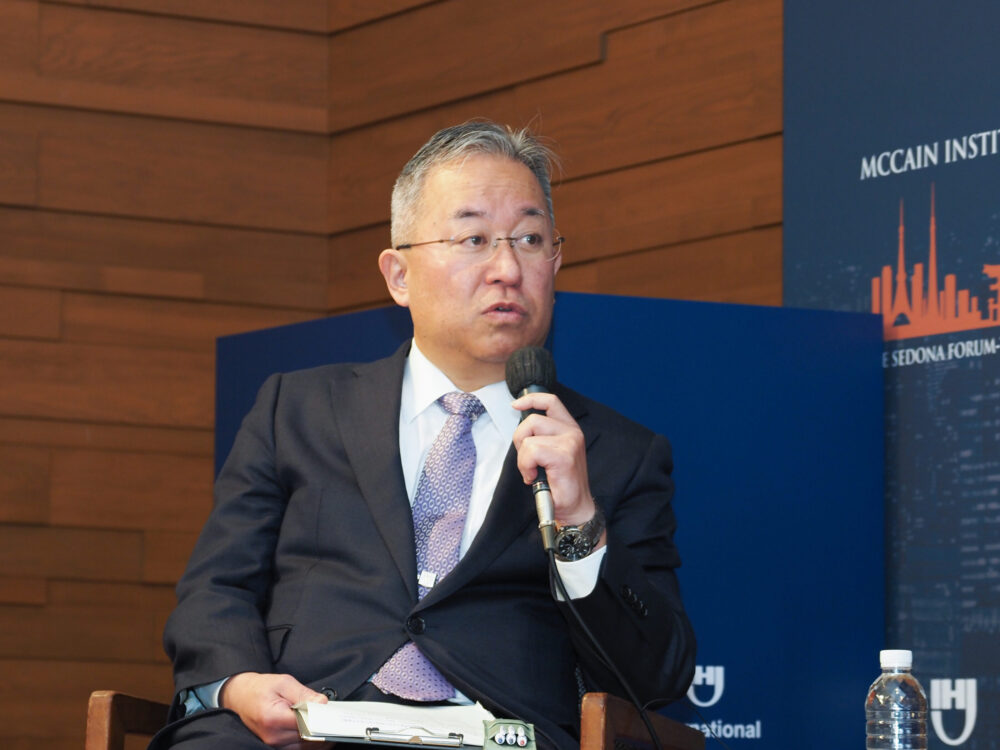
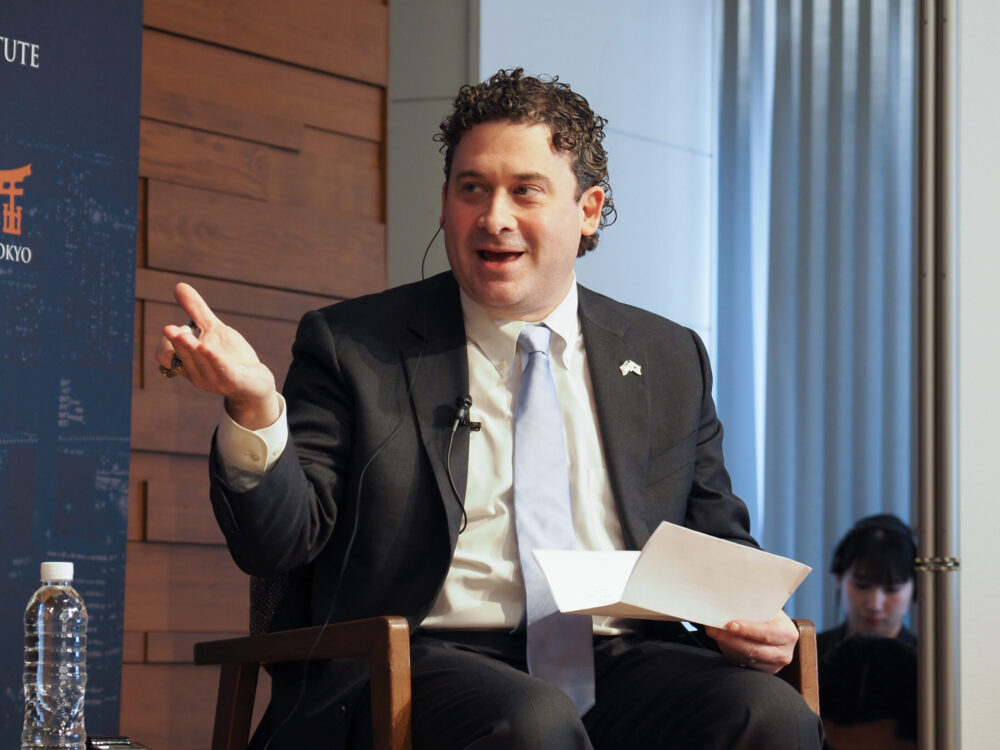
Session 1: Asian Perspectives on Global Security Challenges
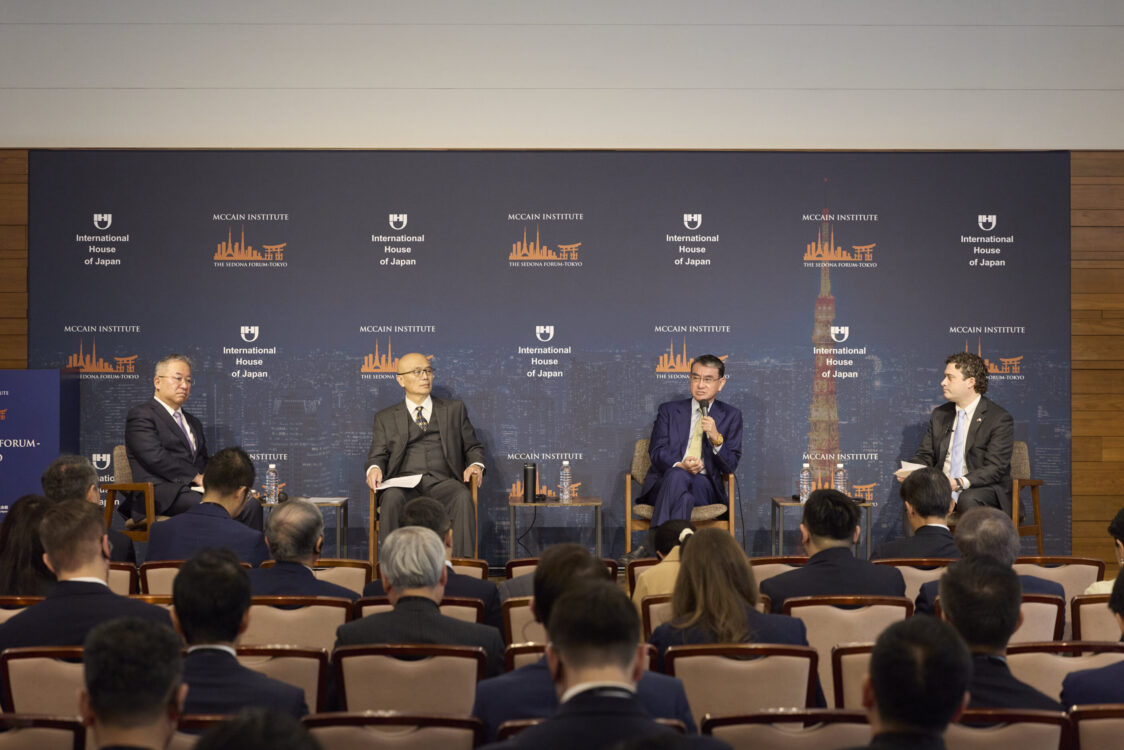
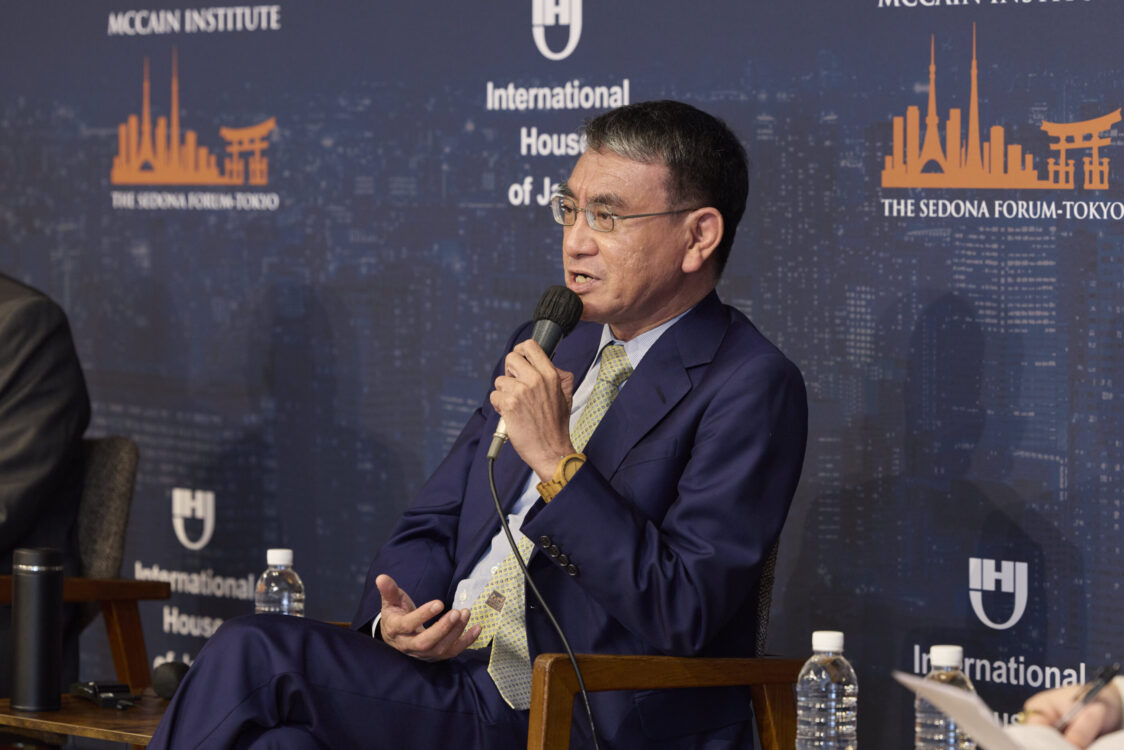
・Taro Kono, Member of the House of Representatives of Japan
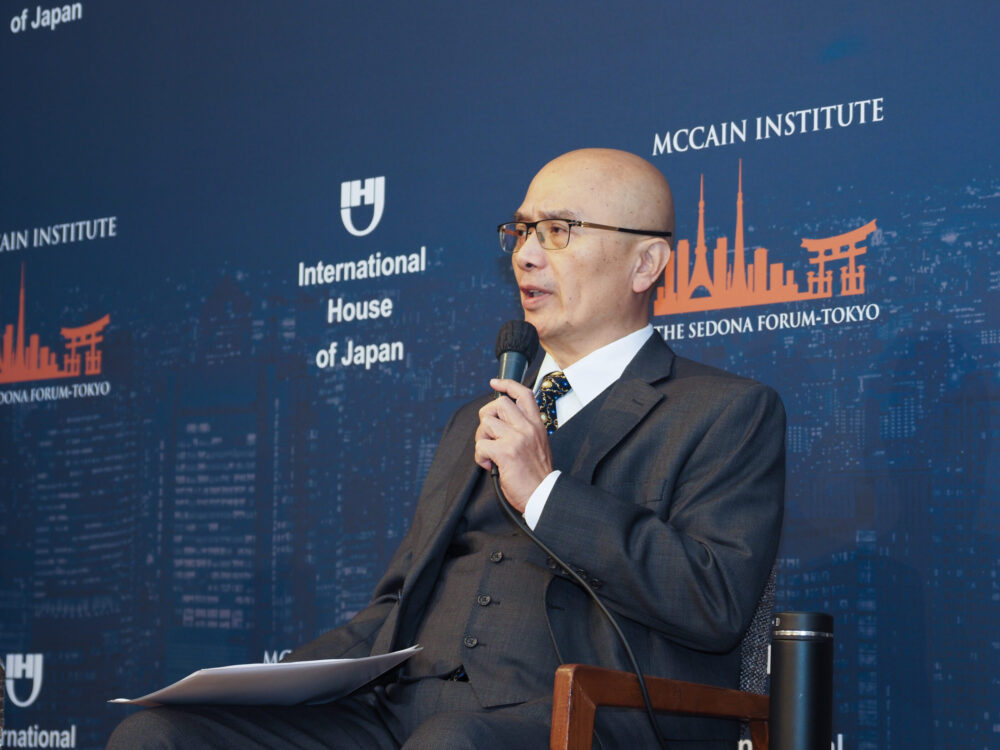
・Holmes Liao, Senior Advisor at the Taiwan Space Agency
・GEN (Ret.) Yoshihide Yoshida, former Chief of Staff of the Japan Joint Staff
Moderated by:
・Josh Rogin, Lead Global Security Analyst at Washington Post Intelligence
Starting from the current relations between the Japanese Government and the Trump Administration, speakers presented a variety of points of interest, including: the importance of US-Japan military-to-military cooperation, the need for stronger Japan-Taiwan ties, the impact of Venezuela on strategic calculations in the Taiwan Strait and the impact of continuing grey zone tactics affecting our political systems.
Session 2: Technology, Energy, and the New Frontlines of National Security
・Sethuraman Panchanathan, University Professor of Technology and Innovation Foundation Chair in Computing and Augmented
Intelligence, Arizona State University and Former Director of the National Science Foundation
・Akihisa Shiozaki, Member of the House of Representatives of Japan
Moderated by:
・Hiroyuki Akita, Commentator at Nikkei Inc.
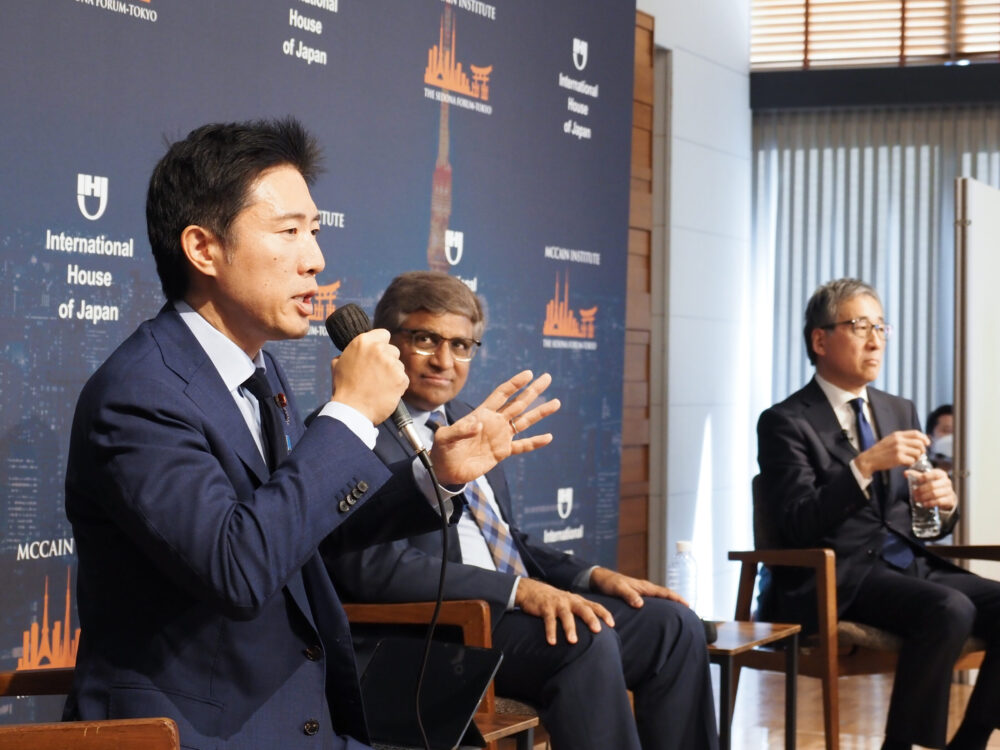
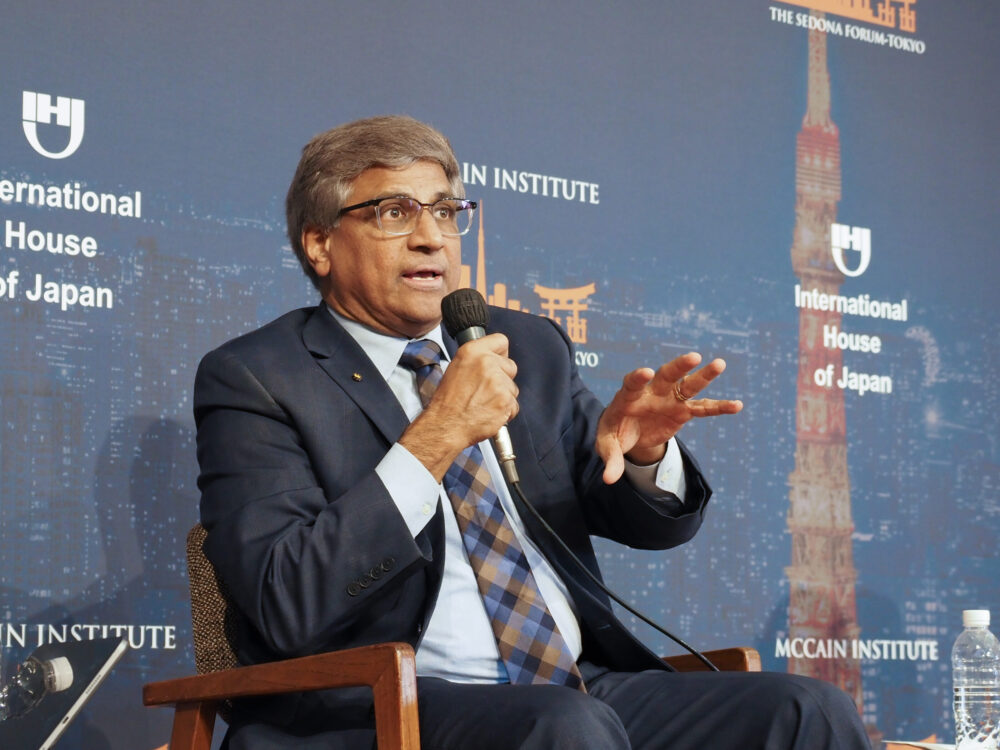
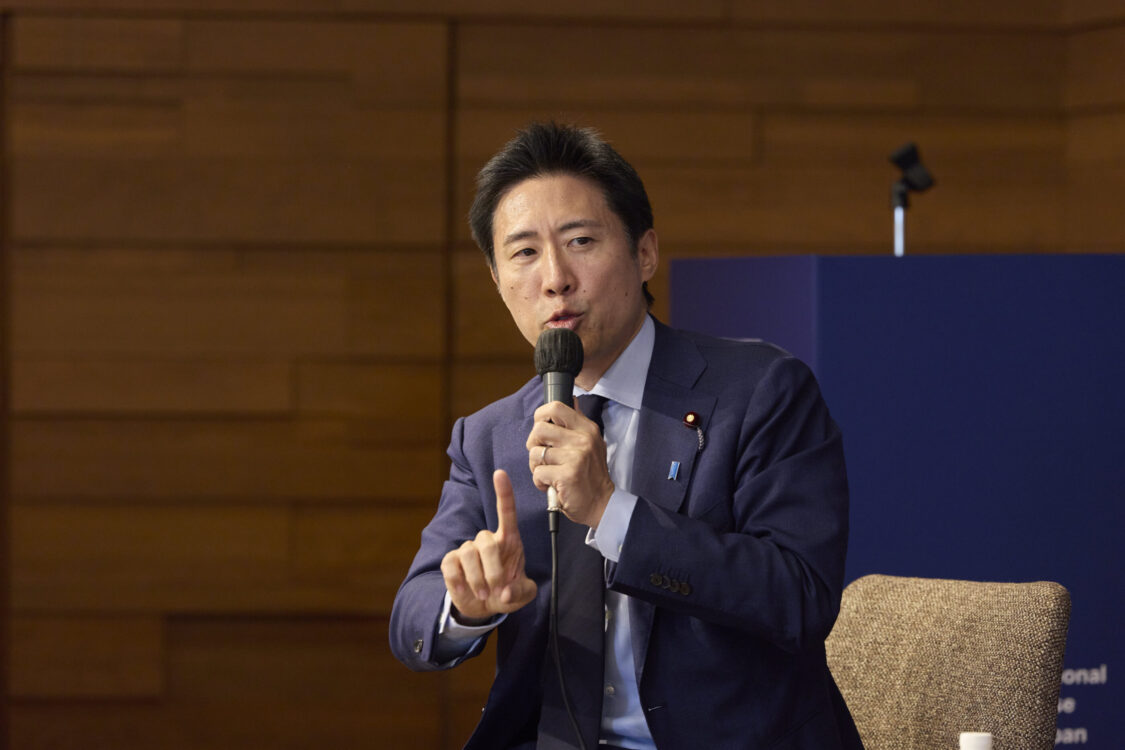
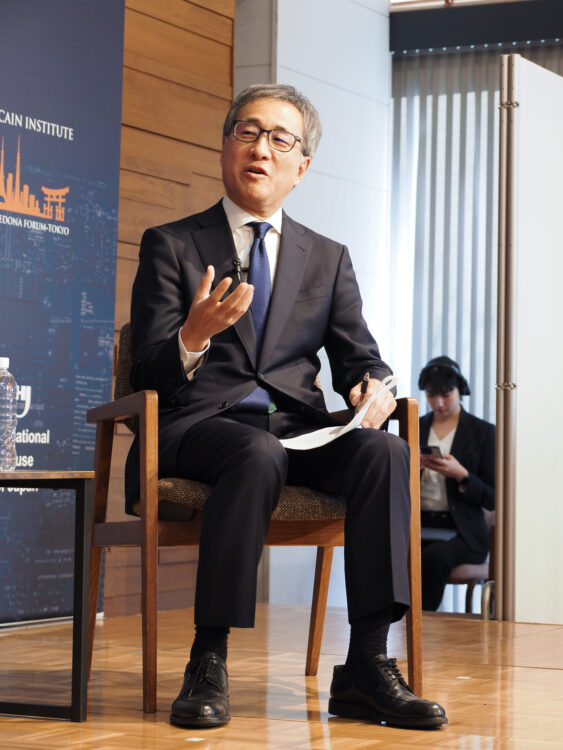
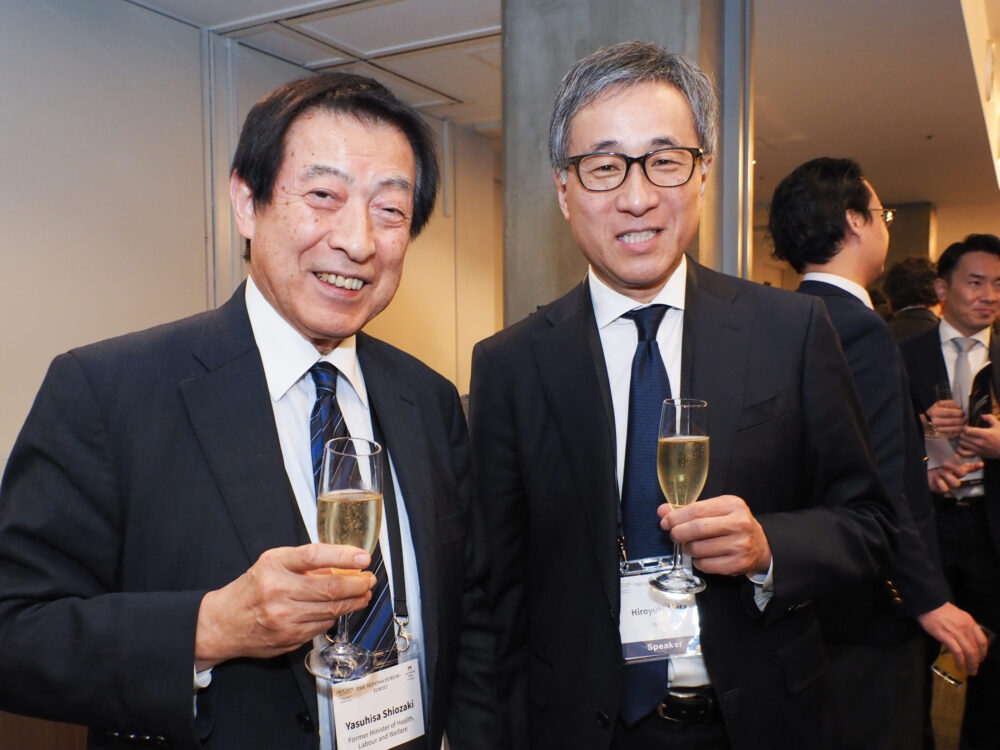
Focusing on three main pillars—innovation and AI, critical minerals and rare earths, and energy security—the panel featured a timely discussion that highlighted distinctive perspectives from both the U.S. and Japanese ecosystems. On AI, participants agreed on the critical importance of cultivating talent with advanced digital and technical skills. Regarding critical minerals and rare earths, continued dependence on China was identified as an ongoing strategic vulnerability. Energy security, particularly for Japan, was likewise seen as an area with structural constraints that limit what can be achieved in the short term.
Lunch Discussion:
・Dr Evelyn Farkas, McCain Institute Executive Director
・General David Petraeus (Ret.), former CIA Director, Partner at KKR and Chairman at KKR Global Institute, and McCain Institute Board Member
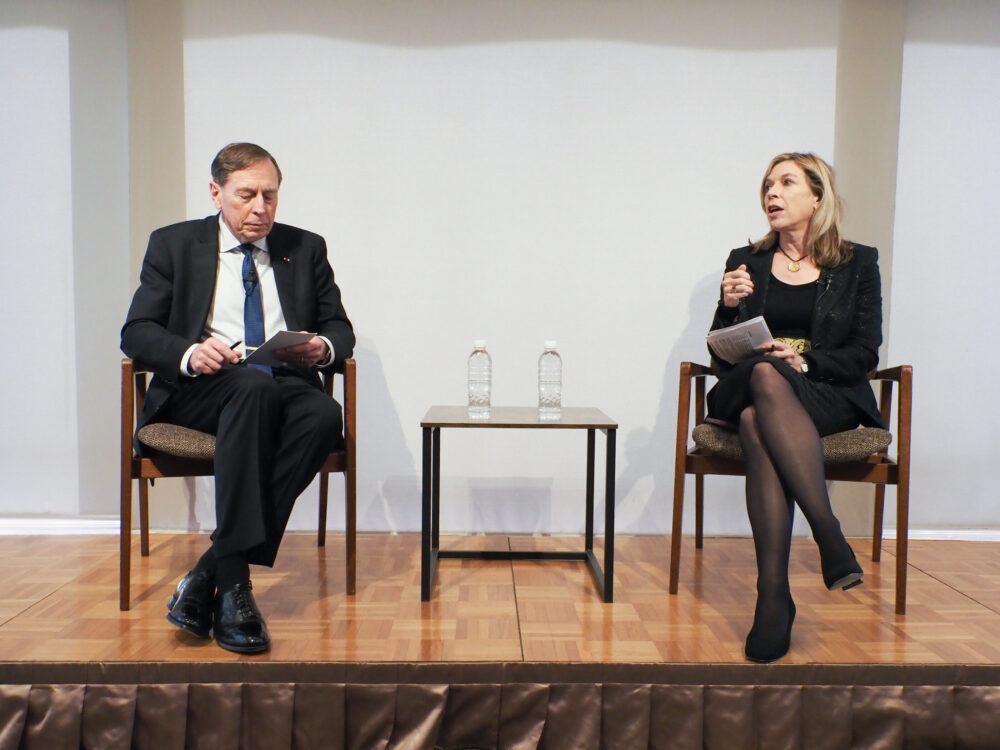
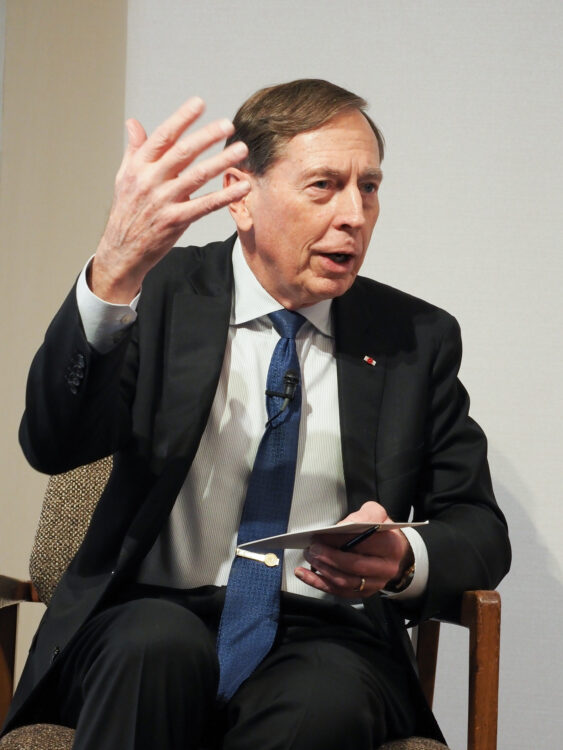
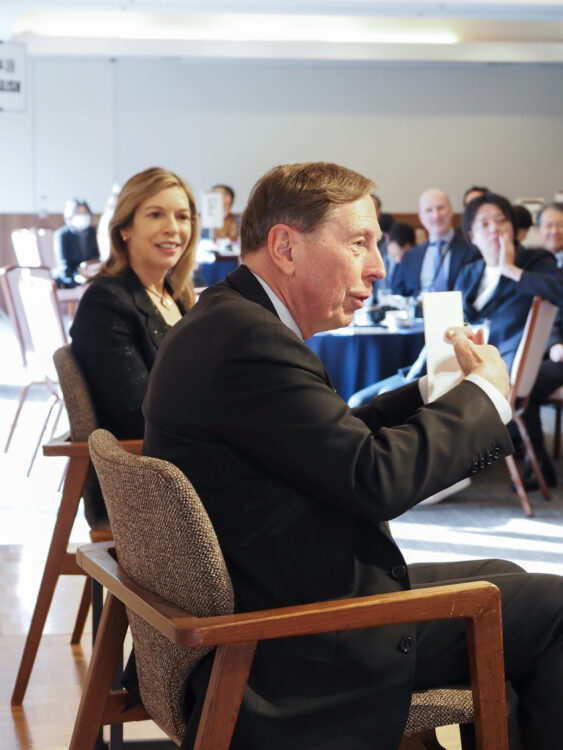
Dr. Farkas and General Petraeus held a wide-ranging working lunch to explore the direction of recent U.S. policy developments and possible alternative approaches. Their discussion covered the National Security Strategy (NSS), the need to adapt military forces to emerging challenges in light of the war in Ukraine and the evolving battlefield environment in the Indo-Pacific, additional perspectives on Ukraine and Russia’s wartime economy, U.S. deterrence toward Iran, the regional implications of developments in Venezuela, and the future of Gaza.

Session 3: China, Taiwan, and the Future of Regional Stability
・Rui Matsukawa, Member of the House of Councilors of Japan
・Satoru Mori, Professor at Keio University
・Randy Schriver, Board Chairman of the Institute for Indo-Pacific Security
Moderated by:
・Ota Masakatsu, Senior and Editorial Writer at Kyodo News
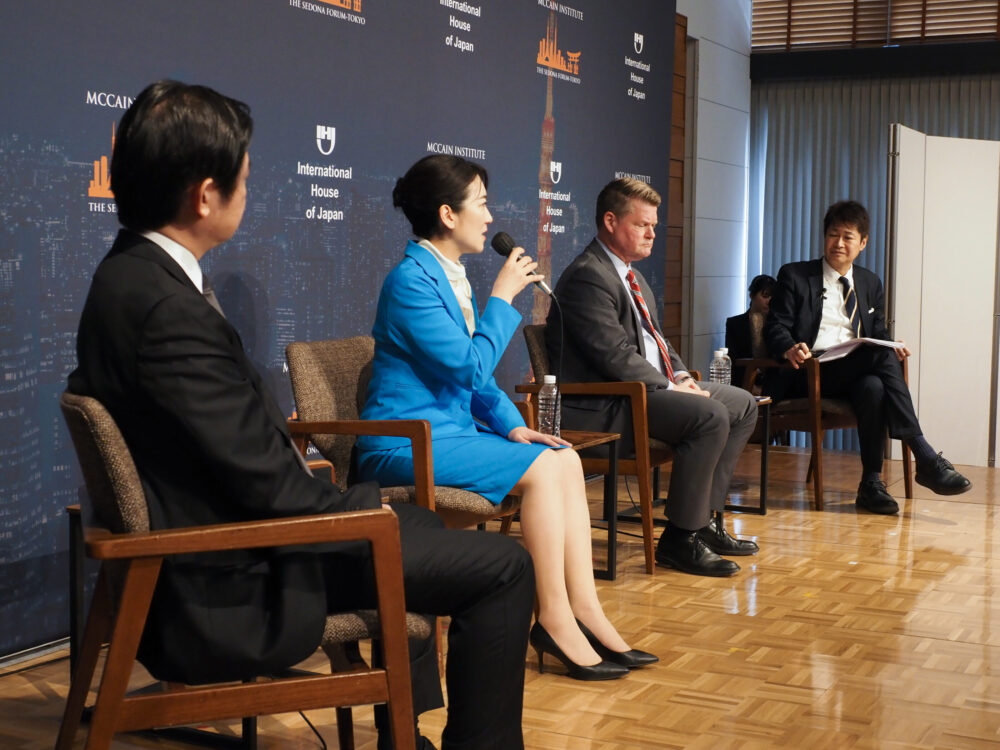
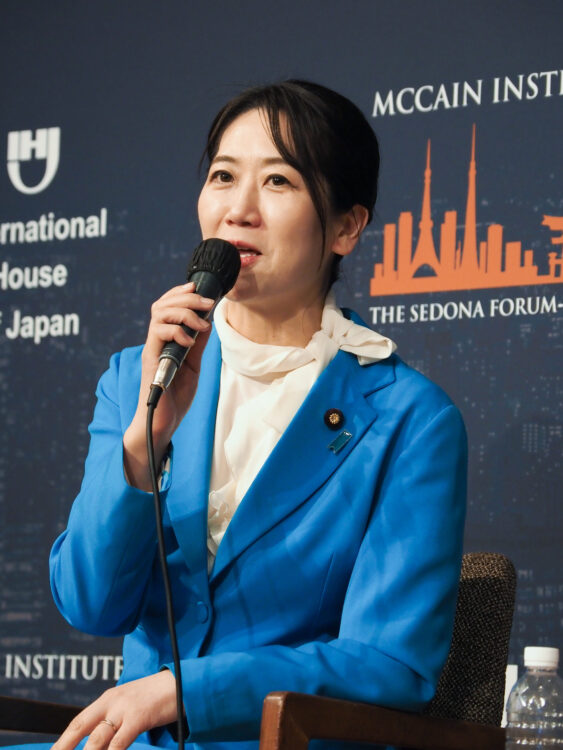
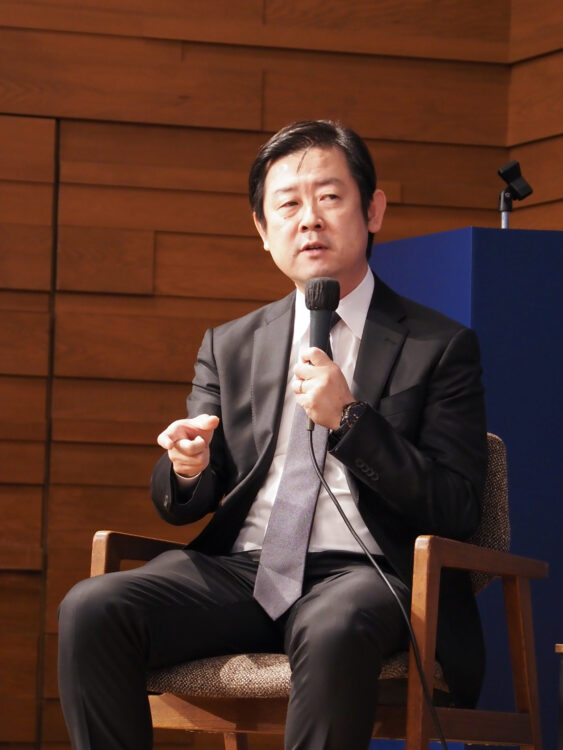
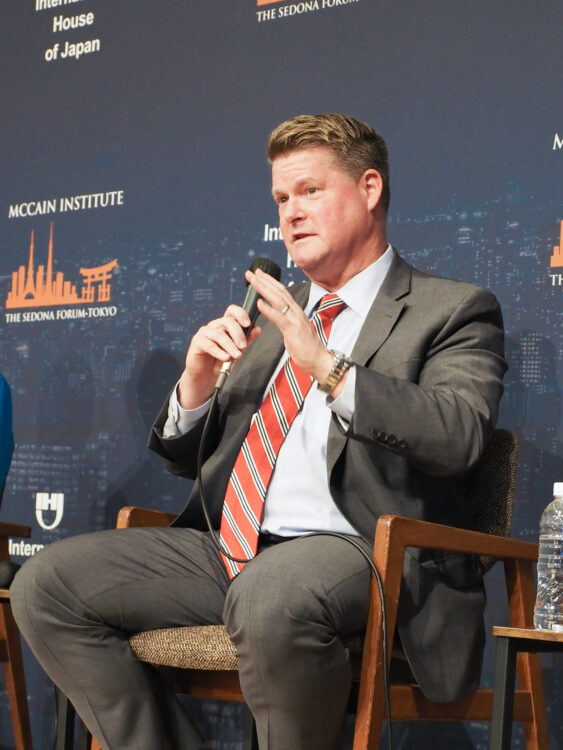
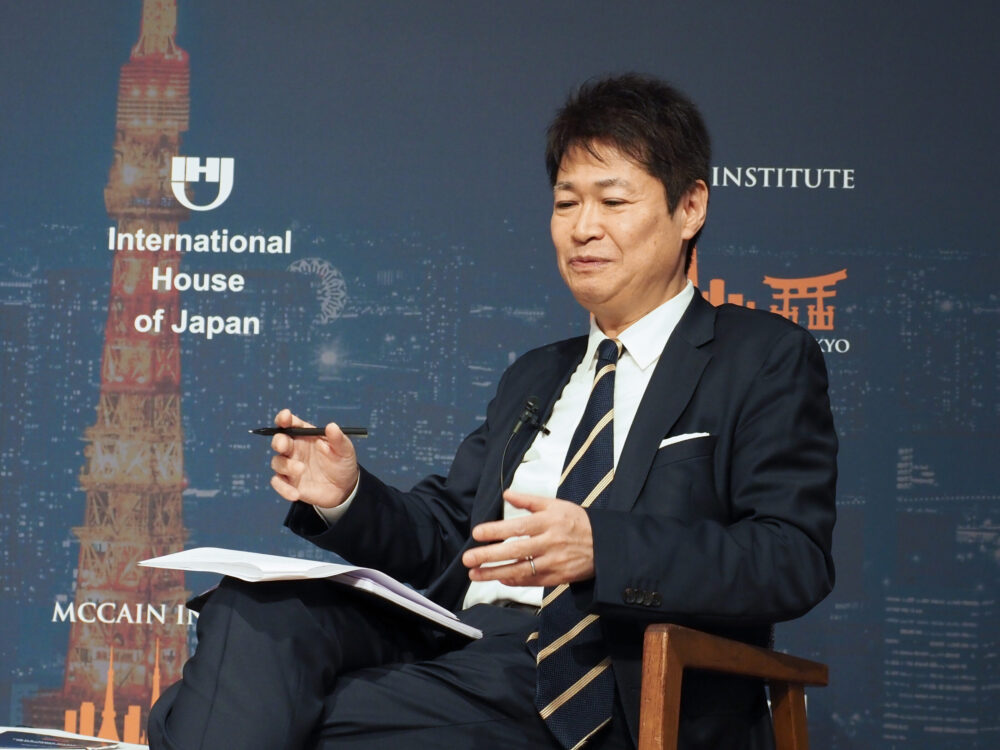
In this session, panelists emphasized the importance of strengthening both diplomatic engagement and deterrence. Among the Japanese public and government officials alike, there is a growing recognition of the challenges to regional stability and the need to increase defense spending. These considerations are further shaped by the second Trump administration’s so-called “unconventional approach,” which has heightened perceptions of unpredictability in U.S. responses to security issues.
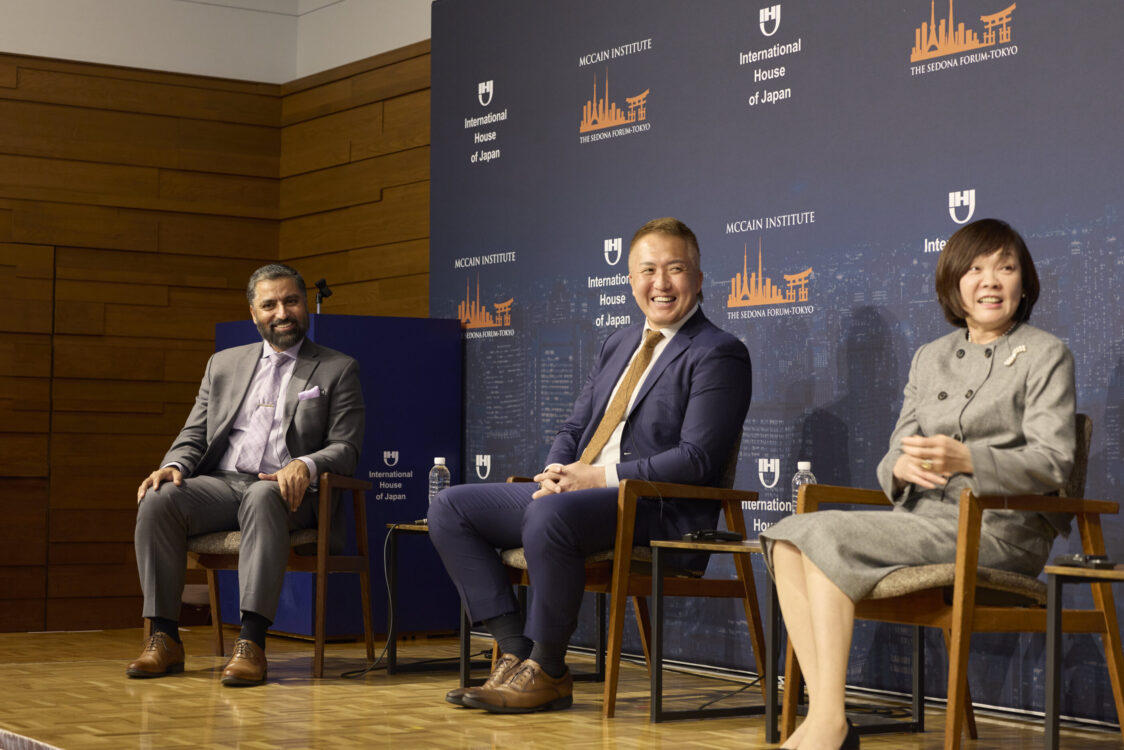
Session 4: Game Changers: How Sports and Culture Shape Diplomacy
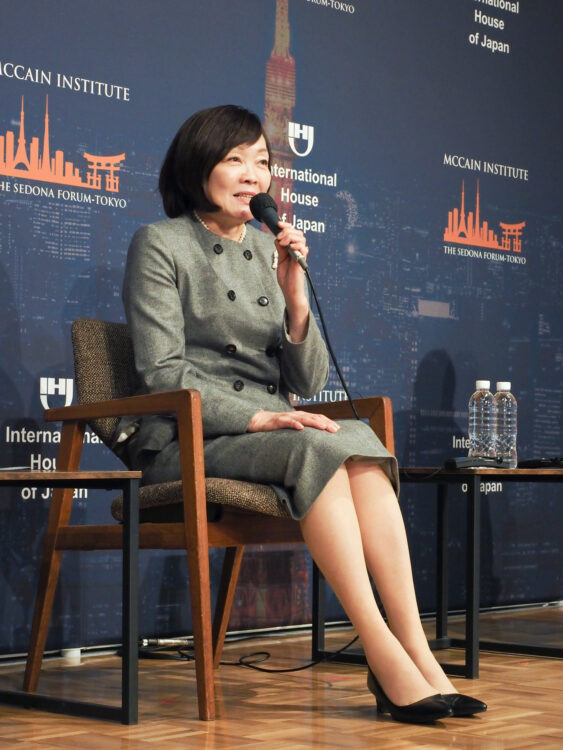
・Akie Abe, Chairperson of the Foundation for Encouragement of Social Contribution
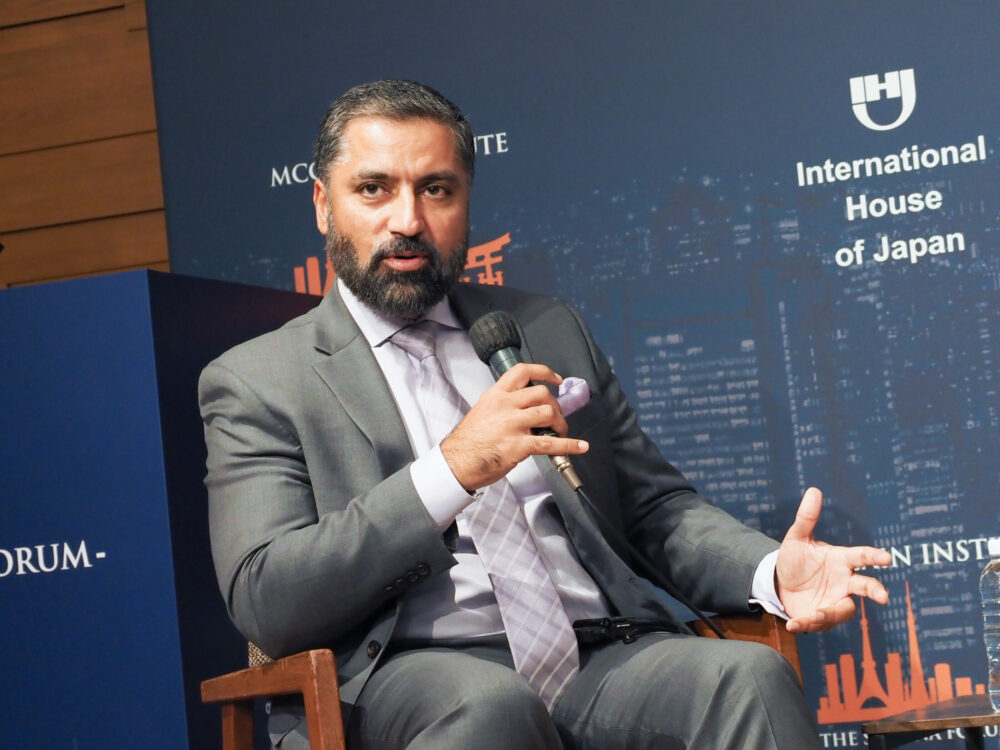
・Simer S. Mayo, former investor in the Rajasthan Royals and co-founder of Sunny Day Sports
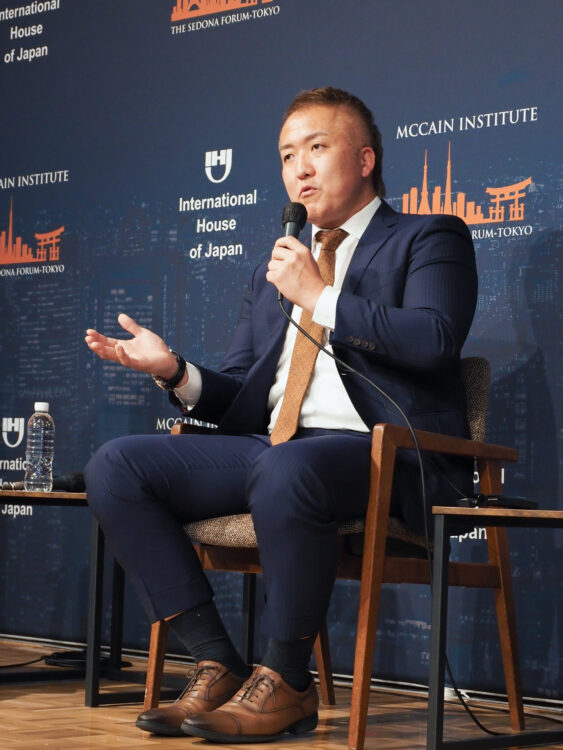
・Keiji Suzuki, 2004 Olympic Gold Medalist
Moderated by:
・Jack McCain, Founder and Ceo, McCain Advisory KK and McCain Institute Board Member
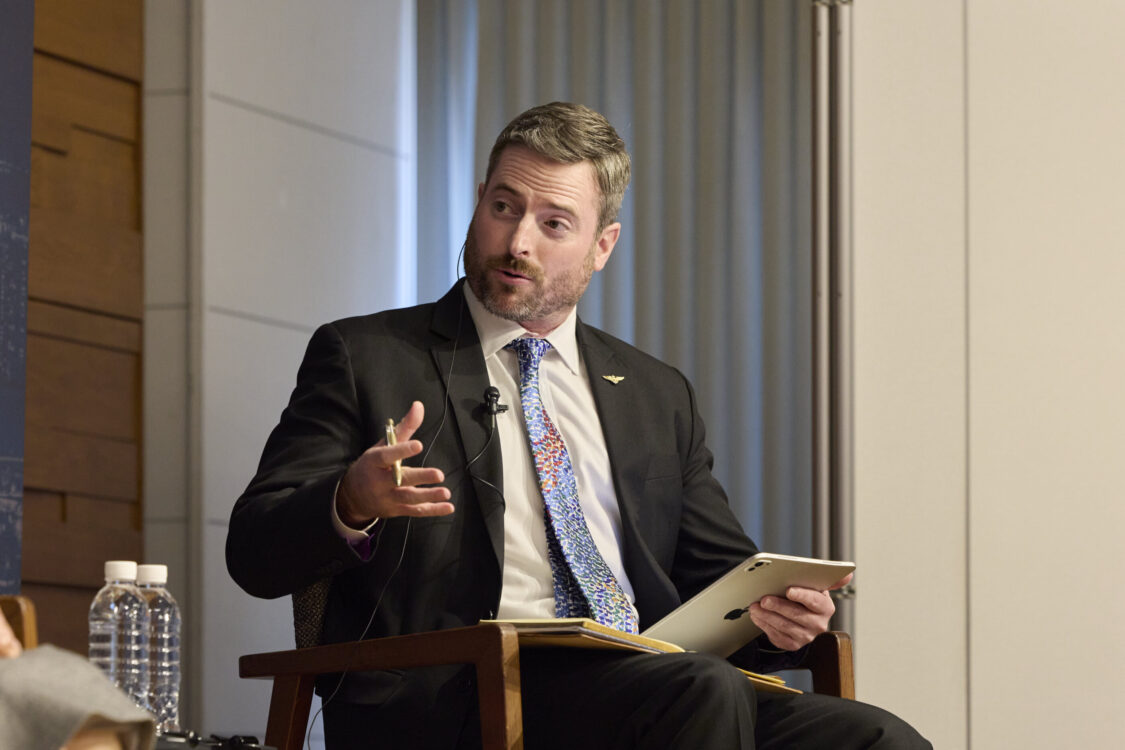
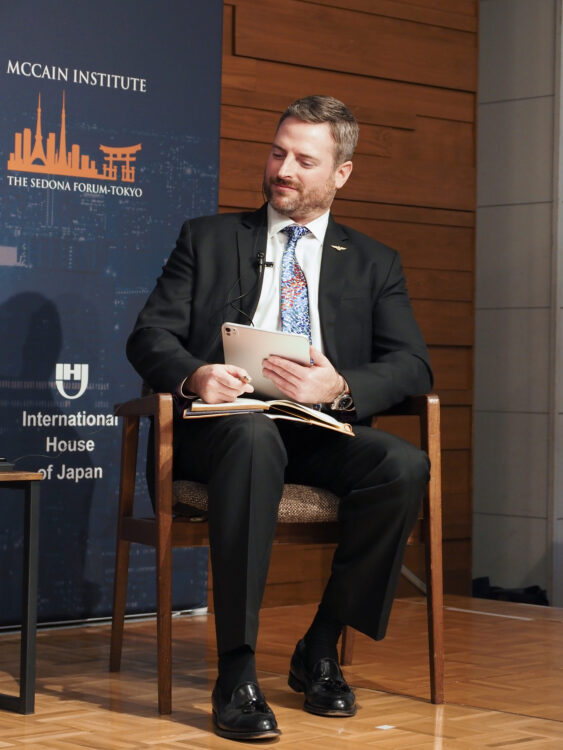
Session 4 explored the role of sports and culture as shapers of diplomacy, noting sports as one of Senator John McCain’s defining interests. The Japanese speakers offered distinctive perspectives as prominent public figures: Keiji Suzuki drew on his experience as a former Olympic athlete who remains actively engaged in international sports initiatives, while Akie Abe highlighted her ongoing efforts to promote Japanese culture in support of peace worldwide. Simer S. Mayo contributed an investor’s viewpoint, emphasizing sports as a vehicle for building trust and bringing people together. Overall, the panel demonstrated how diverse backgrounds can converge on a shared understanding of sports and culture as powerful tools for positive people-to-people exchange.
Session 5: A Conversation with Japan’s Finance Minister
・Satsuki Katayama, Minister of Finance of Japan
・Rick Davis, McCain Institute Board Chairman
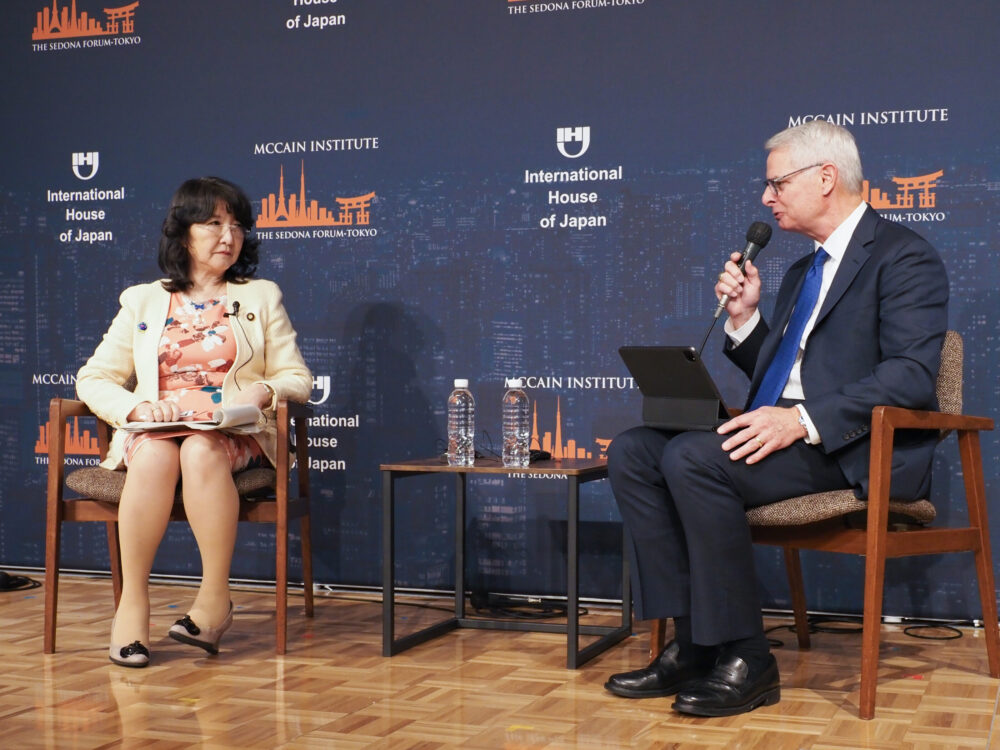
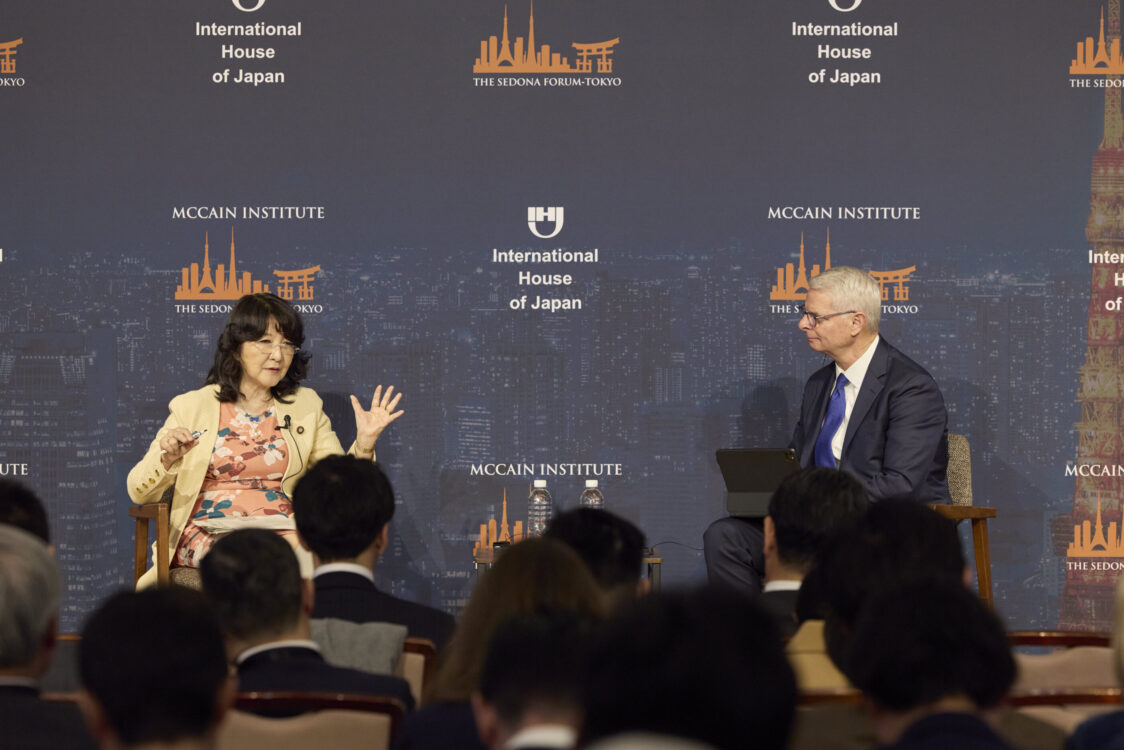
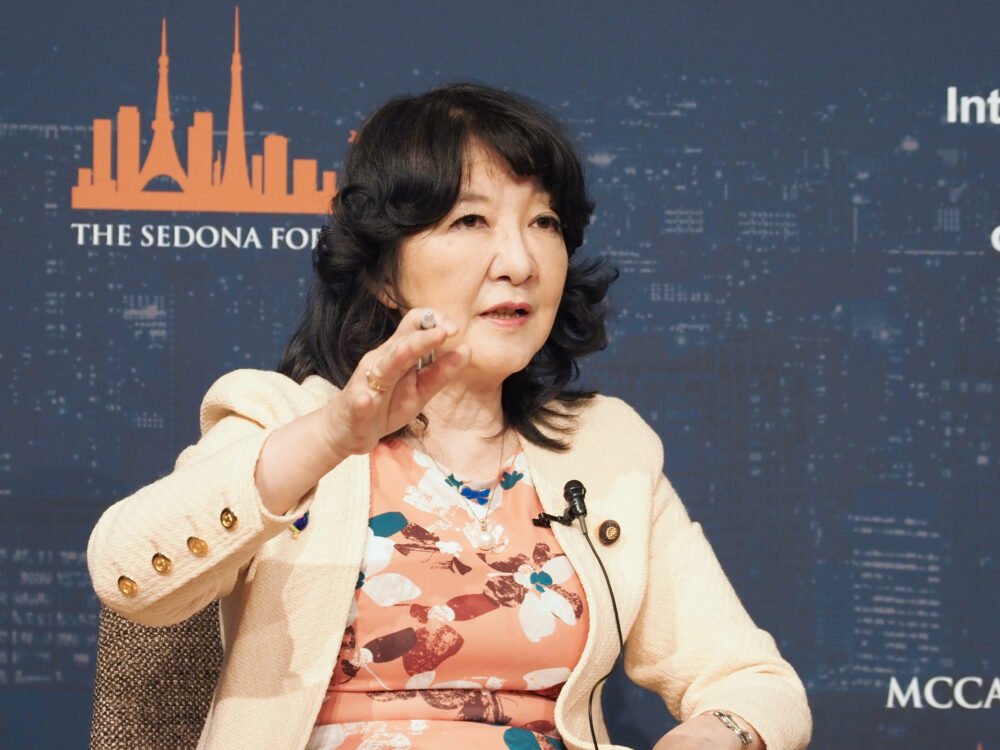
In this conversation, Minister Katayama shared her unique perspective as Finance Minister in the current Takaichi administration, addressing a range of topics including rare earths, the growing role of women in Japanese politics and within the Liberal Democratic Party (LDP), cryptocurrencies and stablecoins, and evolving views surrounding the proposed USD 550 billion investment in the United States.
Closing Remarks and Reflections
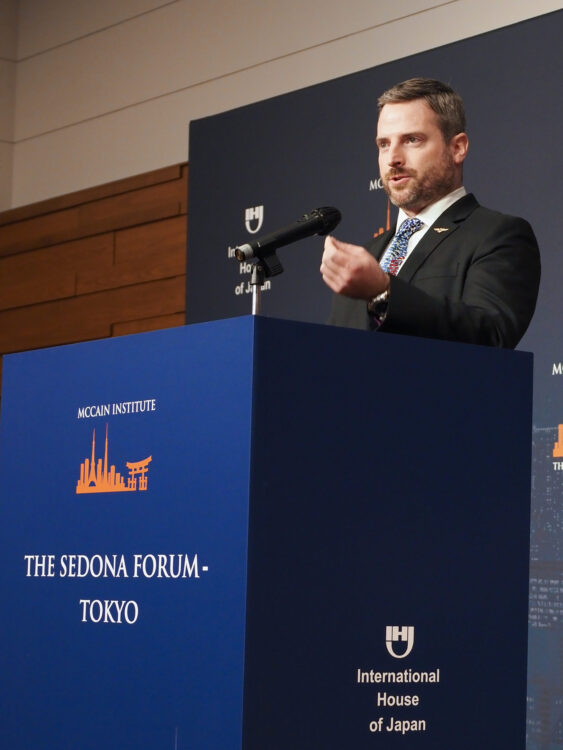
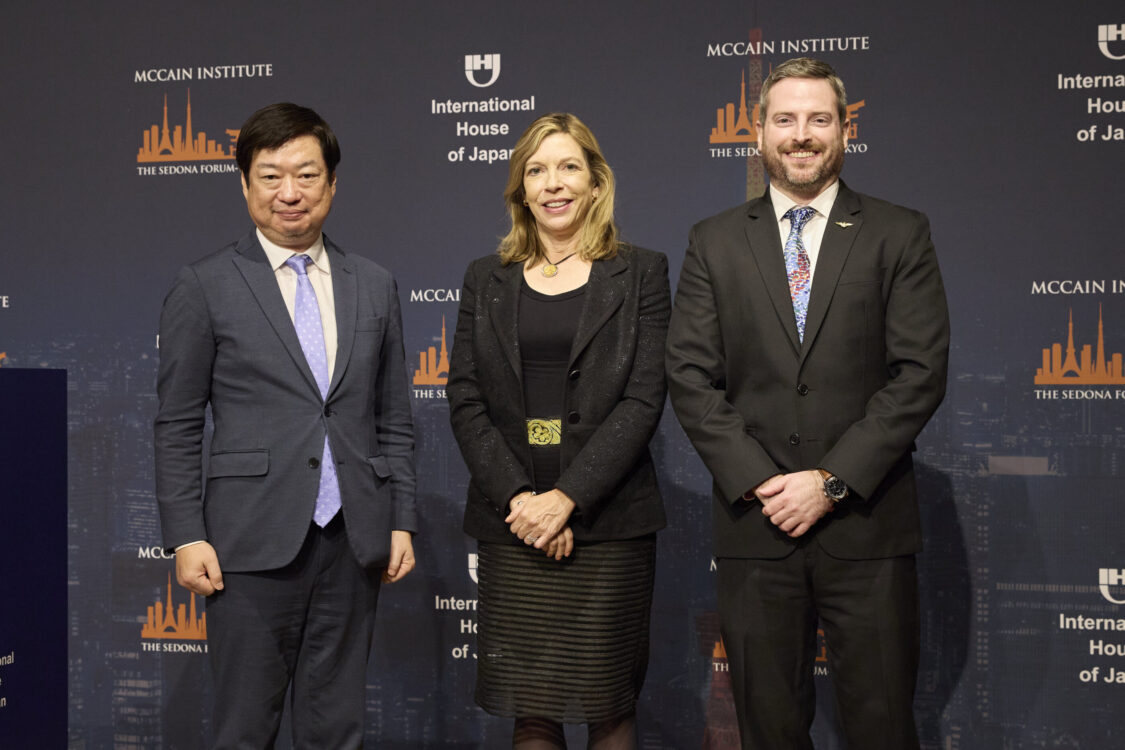
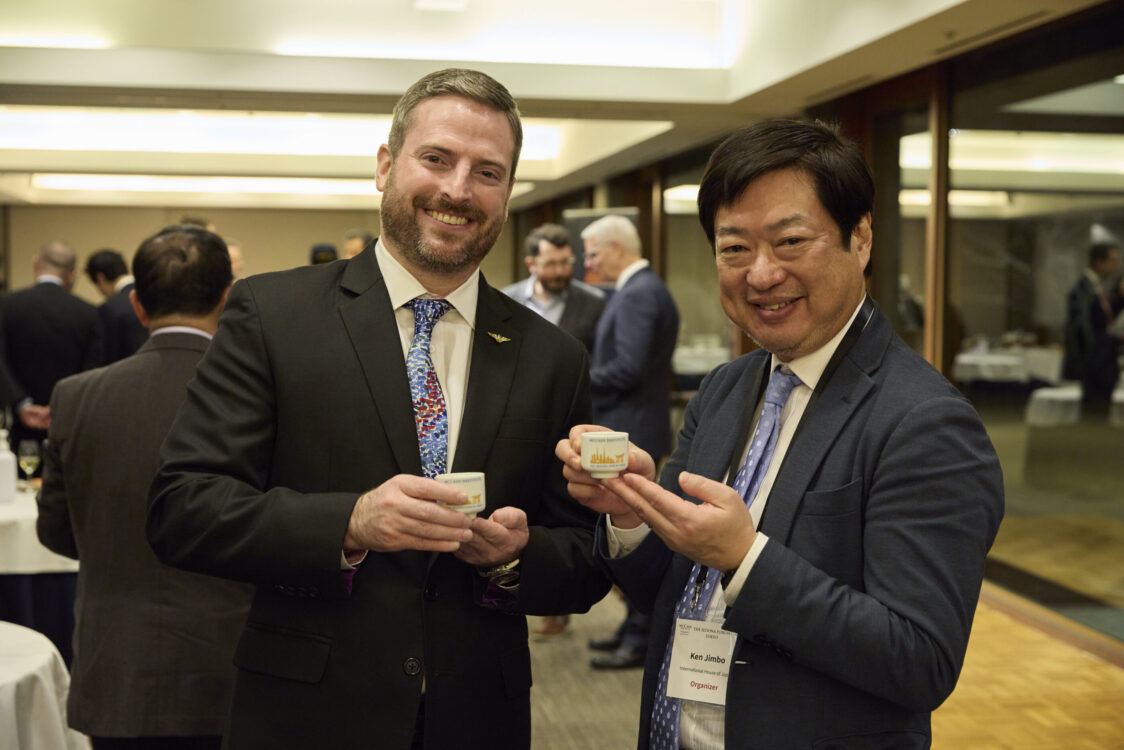
In their closing remarks, Dr. Evelyn Farkas, Ken Jimbo, Managing Director of the International House of Japan, and Jack McCain reflected on the day’s discussions, underscoring the importance of sustained cross-border and cross-sector dialogue and reaffirming a shared commitment to strengthening cooperation among democratic partners.
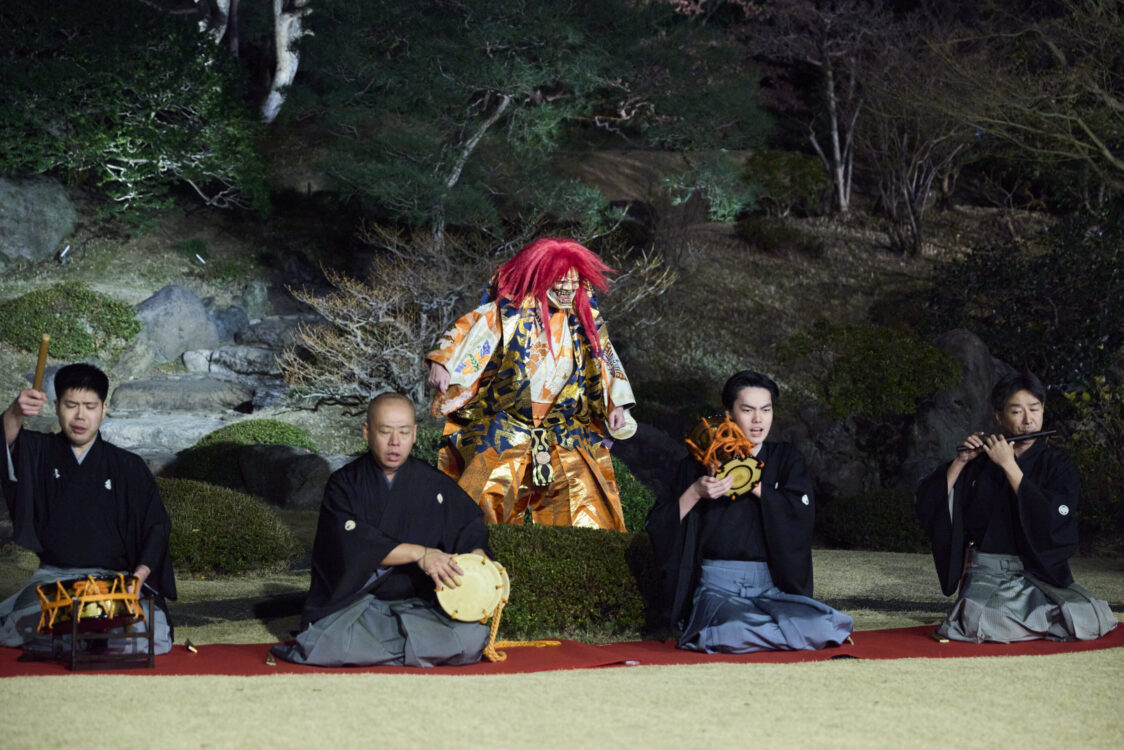
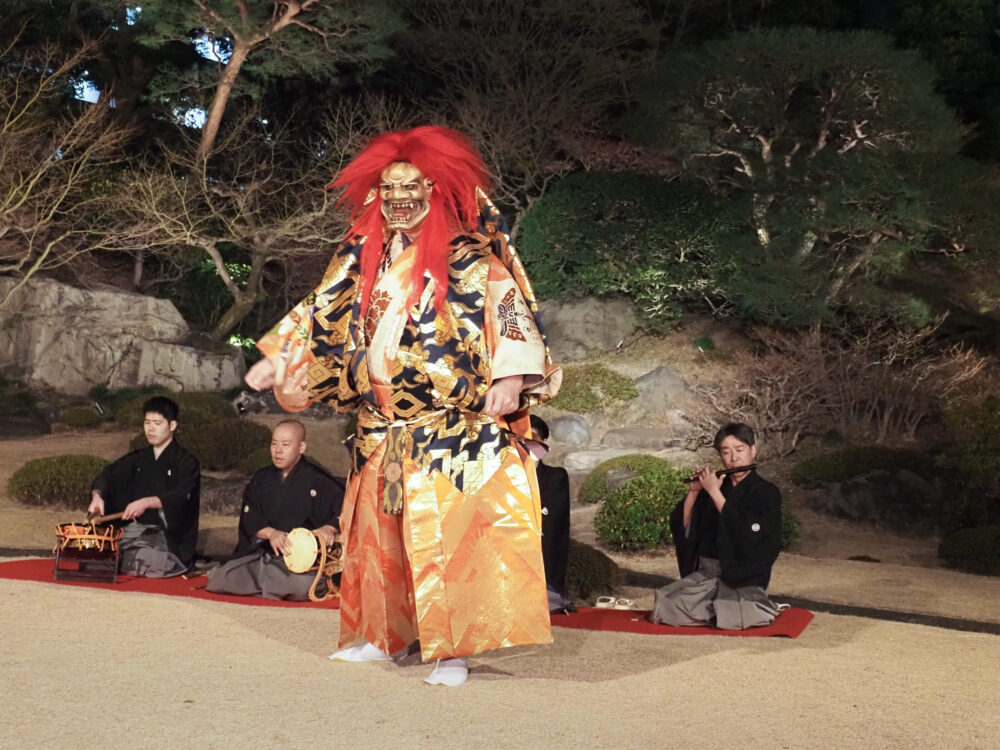
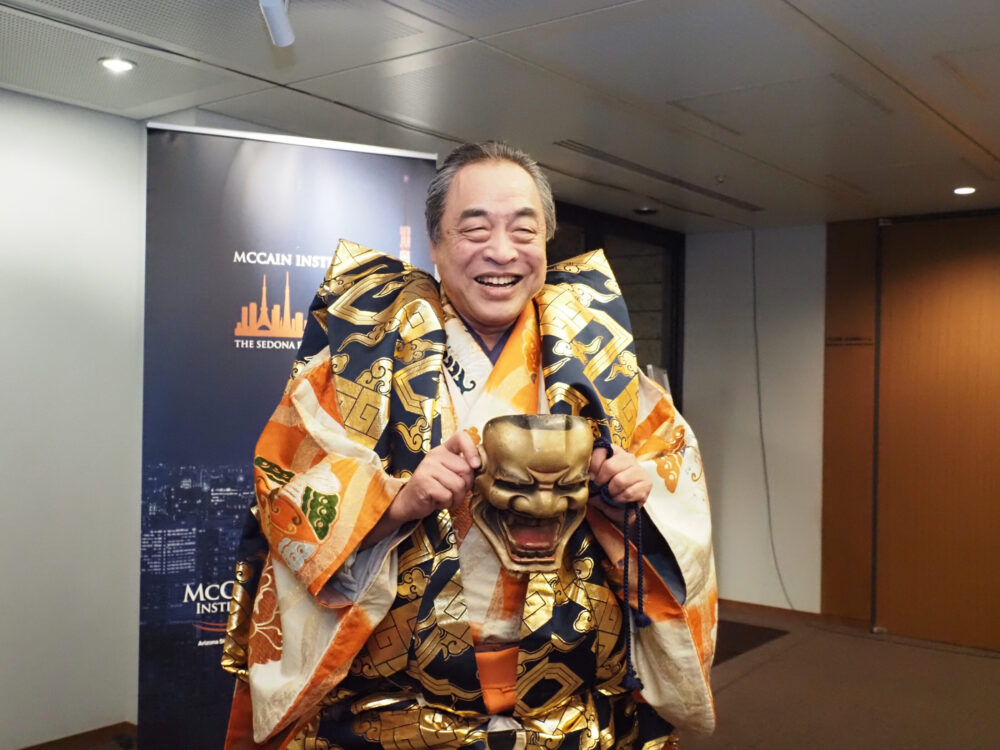
The Sedona Forum Tokyo concluded with a dinner reception, providing participants with further opportunities for informal exchange. Guests also enjoyed a traditional Noh performance, offering a refined introduction to Japanese culture and artistic heritage. The forum reaffirmed the value of IHJ as a convening institution and the importance of sustained, alliance-based dialogue in navigating an increasingly uncertain international environment.
 LINEで送る
- Archives
-
- 2026.09
- 2026.08
- 2026.07
- 2026.06
- 2026.05
- 2026.04
- 2026.03
- 2026.02
- 2026.01
- 2025.12
- 2025.11
- 2025.10
- 2025.09
- 2025.08
- 2025.05
- 2025.04
- 2025.03
- 2025.01
- 2024.11
- 2024.10
- 2024.08
- 2024.07
- 2024.06
- 2024.03
- 2023.11
- 2023.10
- 2023.09
- 2023.08
- 2023.07
- 2023.06
- 2023.05
- 2023.03
- 2023.02
- 2023.01
- 2022.12
- 2022.11
- 2022.10
- 2022.08
- 2022.07
- 2022.05
- 2022.04
- 2022.02
- 2018.09
- 2015.10
- 2013.11
- 2013.09