






News
2025.12.16
【Event Report】Japan-Korea Policy Dialogue – 60 Years of Japan–Korea Relations: Reflections and Future Outlook –
On October 15, 2025, the International House of Japan (IHJ) co-hosted the Japan–Korea Policy Dialogue with the Asan Institute for Policy Studies, a leading think tank in South Korea. The event was convened to mark the 60th anniversary of the normalization of diplomatic relations between Japan and South Korea, reflecting on the trajectory of bilateral ties over the past six decades and exploring their future prospects.
The Korean delegation included Ambassador Lee Hyuk, Ambassador of the Republic of Korea to Japan; former senior officials of the Ministry of Foreign Affairs; former ambassadors to Japan; and leading representatives and researchers from major Korean think tanks and research institutions. The Japanese side was represented by former Prime Minister Fumio Kishida, Rep. Akihisa Nagashima, Special Advisor to the Prime Minister for National Security, government officials specializing in security policy, experts on Japan–Korea relations, and research fellows from IHJ.
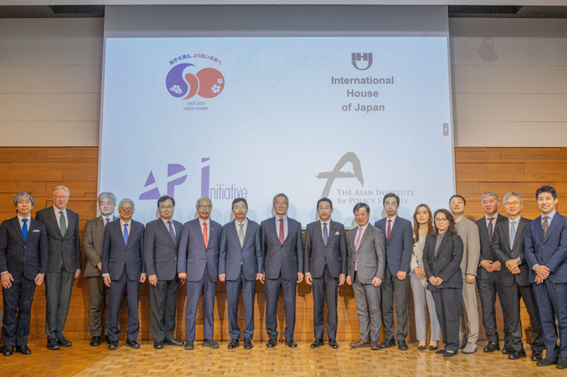
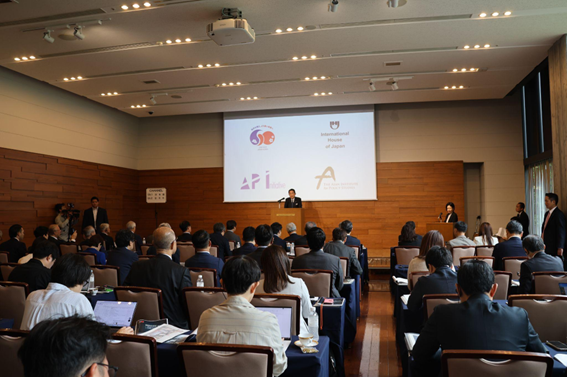
Opening Session
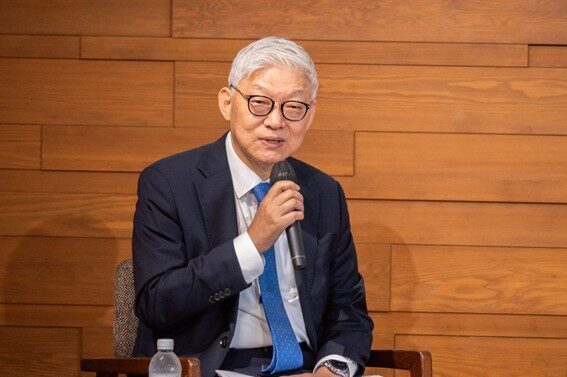
Chung Mong-Joon, Honorary Chairman of the Asan Institute for Policy Studies, opened the dialogue by expressing his pleasure at holding this symposium in such a milestone year—the 80th anniversary of Korea’s liberation from Japanese colonial rule and the 60th anniversary of the normalization of Japan–Korea diplomatic relations.
He stressed that the two countries should aim to be “close and closer neighbors,” not “close but distant neighbors.” While acknowledging the continued importance of addressing historical issues, he emphasized that Japan–Korea cooperation is “a necessity, not a choice” and called for the creation of new cooperation frameworks, including an “Asian NATO” concept.

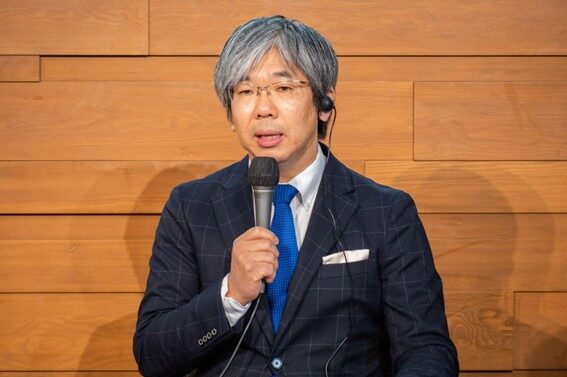
Ken Jimbo, President of API and IHJ Managing Director, noted that the bilateral relationship has evolved from a phase of “repairing ties” to one of “jointly tackling shared challenges.” He expressed hope that IHJ and the Asan Institute could serve as a bridge for future generations, helping Japan and Korea become a driving force for overcoming global fragmentation.

Congratulatory Remarks & Keynote Speech
Ambassador Lee Hyuk, who took office last month, underscored the crucial role of shuttle diplomacy at the leaders’ level in building “close and closer” Japan–Korea relations. While acknowledging that emotions can sometimes impede bilateral ties, much like in human relationships, he expressed strong determination to overcome such hurdles and make cooperation with Japan—which he described as Korea’s top diplomatic priority—a success across all sectors.
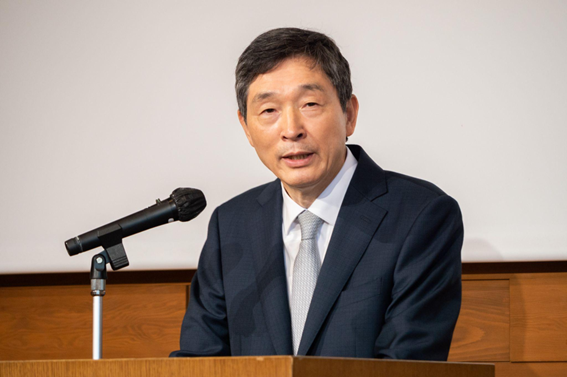
Fumio Kishida, former Prime Minister of Japan, delivered the keynote speech. He recalled the history of Japan–Korea relations, which have advanced despite numerous difficulties, and emphasized once again that Japan–Korea cooperation is not optional but essential. He praised the improvement in bilateral relations since the inauguration of the Yoon administration in 2022 and the trust-building fostered through the resumption of shuttle diplomacy. Kishida stressed the importance of people-to-people exchanges as the foundation of bilateral ties, and called for closer cooperation on shared challenges such as disaster prevention, aging societies, and North Korea.

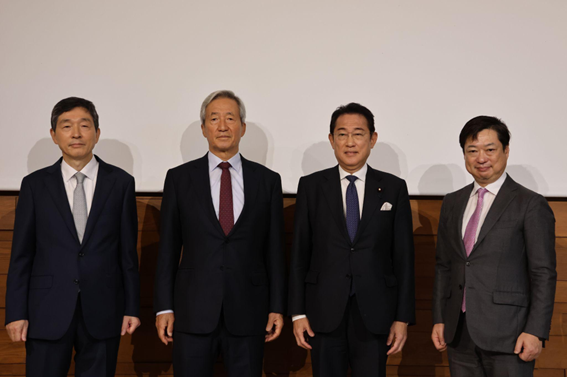
Session 1: Japan–U.S.–Korea Relations in the Trump 2.0 Era
Moderated by Yun Duk-Min, former Ambassador of the Republic of Korea to Japan, the first session explored the future of trilateral relations amid shifting U.S. foreign policy.
Yuichi Hosoya, IHJ Board Member and Professor at Keio University, noted that a second Trump administration could bring uncertainty to alliance commitments and signal a retreat from universal values such as freedom and democracy. In this context, he argued that Japan should enhance its strategic autonomy, strengthen its defense capabilities, and deepen ties with like-minded partners—including South Korea—to exercise greater diplomatic leadership in the region.
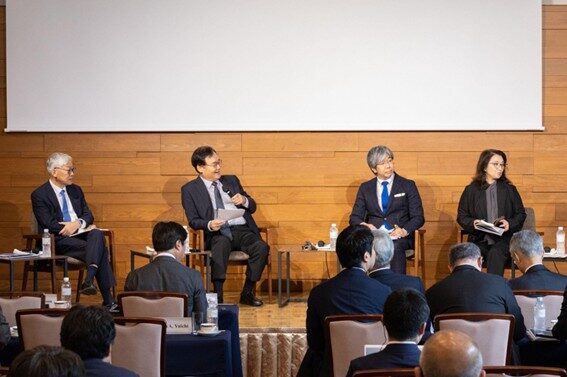
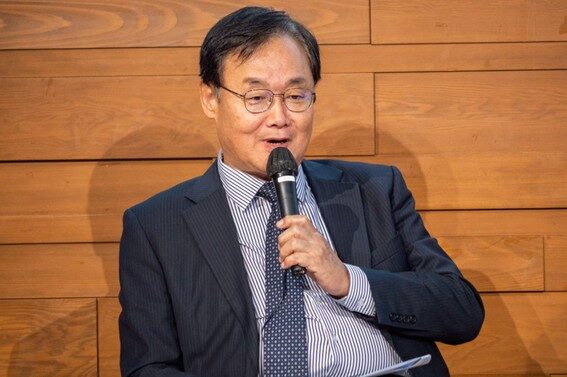
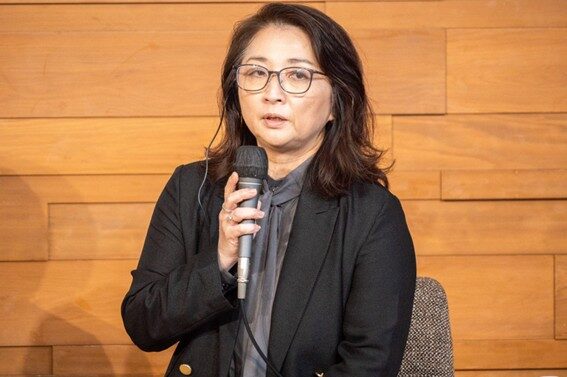
Lee Yong-Joon, President of the Sejong Institute, provided an in-depth analysis of U.S.–China strategic competition, suggesting that Washington’s decoupling policies have effectively constrained China’s rise. He argued that a Trump 2.0 administration is likely to pursue a new international order to prevent China’s resurgence, while expanding allied responsibilities to create a security structure favorable to the U.S. He warned that allies must prepare strategically for an era without a “benevolent hegemon.”
In the discussion, Professor Yasuyo Sakata of Kanda University of International Studies, the session’s discussant, and other participants exchanged views on Korea’s strategic choices amid U.S.–China rivalry, economic resilience under protectionism, and responses to a potential Taiwan contingency.
Session 2: Japan–Korea and Japan–U.S.–Korea Cooperation on the North Korean Nuclear Issue
Facilitated by Ken Jimbo, IHJ Managing Director, the second session focused on practical and strategic cooperation frameworks for addressing the North Korean threat.

Yang Uk, Research Fellow at the Asan Institute, highlighted that despite North Korea’s steady progress in its nuclear and missile programs, Japan–Korea military cooperation remains underdeveloped. He proposed structuring future cooperation through the DIME-FIL framework (Diplomatic, Information, Military, Economic, etc.) and suggested creating a Japan–Korea Real-Time Information Sharing Network (SIREN).
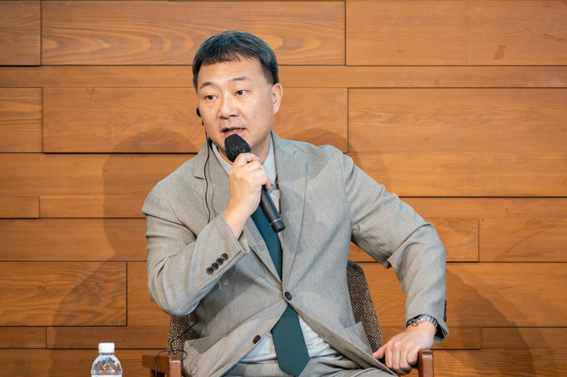
Nobumasa Akiyama, Professor at Hitotsubashi University, analyzed recent trends in North Korea’s weapons development and noted policy priority gaps among Japan, the U.S., and South Korea. He outlined key issues for institutionalizing trilateral cooperation and suggested reconsidering whether denuclearization should remain the central policy objective.

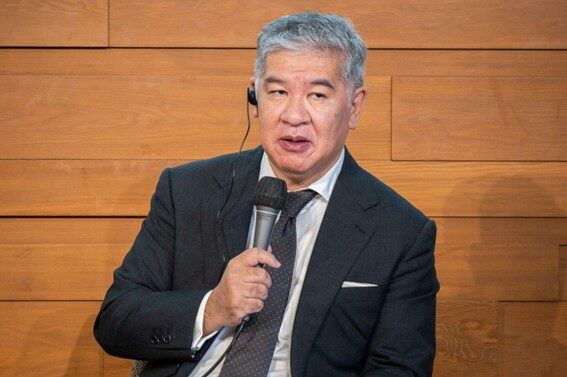
Hirohito Ogi, Senior Research Fellow at the Institute of Geoeconomics, raised concerns about the reliability of U.S. commitment and stressed the importance of linking intelligence sharing to operational planning.
From the floor, participants discussed how Japan and Korea might cooperate in scenarios where U.S. involvement is limited, as well as strategies to manage Chinese pressure as bilateral ties deepen.
Session 3: Japan–Korea Cooperation in the Indo-Pacific: Current Status and Challenges
Chaired by Shin Kak-Soo, former Vice Minister of Foreign Affairs of Korea, the final session focused on strategic directions for future cooperation.
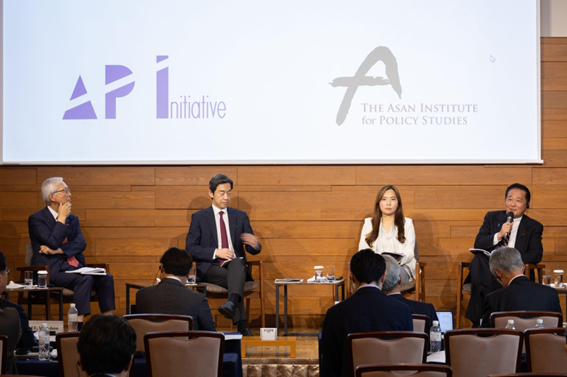
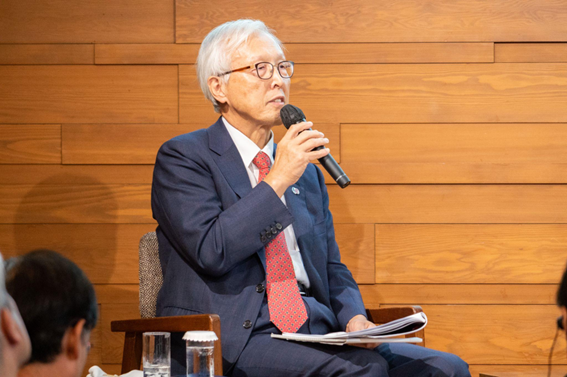
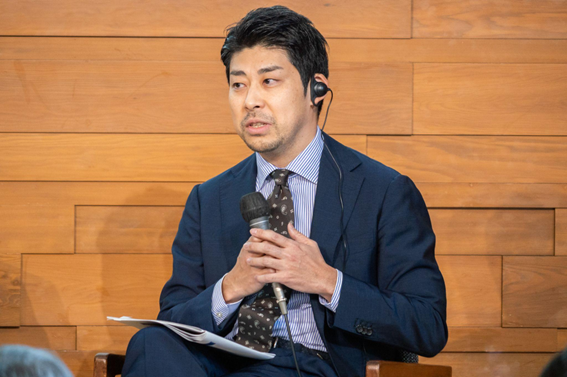
Junya Nishino, Professor at Keio University, outlined three perspectives on the future of Japan–Korea cooperation. He pointed out the possibility of diverging policy approaches as South Korea explores new frameworks for inter-Korean relations. He also emphasized the importance of multilateral cooperation among Japan, Korea, Australia, and others in light of shifting domestic and regional dynamics.
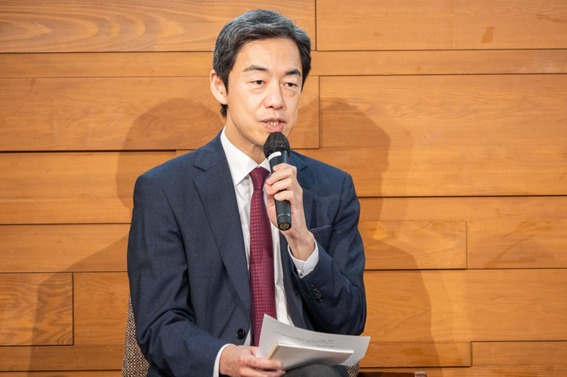
Choi Eun-Mi, Research Fellow at the Asan Institute, presented on threat perceptions and public opinion trends, noting the sharp increase in South Korean support for defense cooperation with Japan. However, she highlighted persistent gaps between expert and public perceptions and stressed the need for governments to respond to public sentiment effectively.
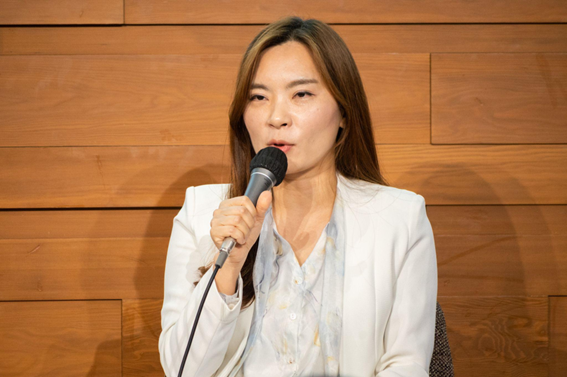
Akihisa Nagashima, Member of the House of Representatives and Special Advisor to the Prime Minister on national security, referred to his long-advocated concept of a “Japan–Korea alliance” and praised the recent progress in strategic dialogue. He outlined his three principles managing historical issues: Maintain a long-term strategic perspective; Respect past agreements; Convince domestic audiences with courage. He emphasized the importance of strategic and constructive dialogue.
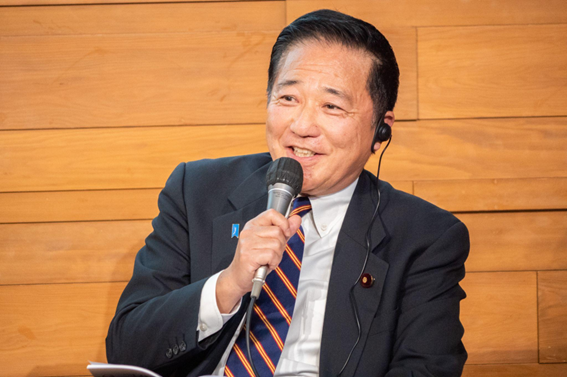
The discussion also explored effective public communication of complex security issues, strengthening multilateral cooperation involving the U.S., engagement with the Global South, Korea’s potential participation in CPTPP, and institutional and political challenges for defense cooperation. It concluded with a reminder that irresponsible political remarks can harm bilateral relations and reaffirmed the need for responsible, forward-looking dialogue.
Closing Session
In closing remarks, Ken Jimbo and Choi Kang, President of the Asan Institute, reflected on how Japan–Korea relations are evolving from “managing issues” to “shaping order.” They reiterated the continued importance of responsibly managing historical issues and expressed their satisfaction with the frank and constructive dialogue that had taken place throughout the symposium. President Choi concluded the event with a powerful message: “Those who forget the past cannot build the future.”
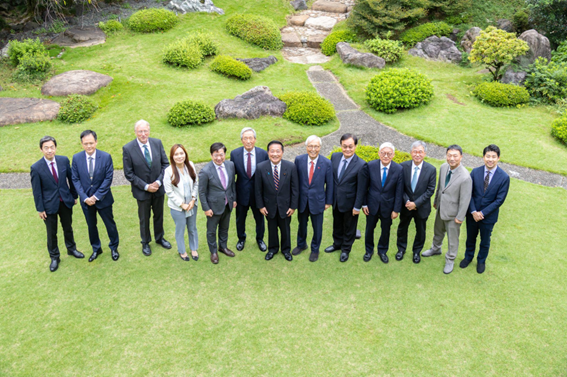
This dialogue was a significant step forward in fostering strategic and forward-looking Japan–Korea relations, highlighting shared challenges and opportunities for deeper cooperation in an increasingly complex regional environment.
 LINEで送る
- Archives
-
- 2026.09
- 2026.08
- 2026.07
- 2026.06
- 2026.05
- 2026.04
- 2026.03
- 2026.02
- 2026.01
- 2025.12
- 2025.11
- 2025.10
- 2025.09
- 2025.08
- 2025.05
- 2025.04
- 2025.03
- 2025.01
- 2024.11
- 2024.10
- 2024.08
- 2024.07
- 2024.06
- 2024.03
- 2023.11
- 2023.10
- 2023.09
- 2023.08
- 2023.07
- 2023.06
- 2023.05
- 2023.03
- 2023.02
- 2023.01
- 2022.12
- 2022.11
- 2022.10
- 2022.08
- 2022.07
- 2022.05
- 2022.04
- 2022.02
- 2018.09
- 2015.10
- 2013.11
- 2013.09